


Wort zur Suche eingeben
confounded
UK
/kənˈfaʊndɪd/
US
/kənˈfaʊndɪd/
Bibliothek
Alis, he says, may God confound me if the matter is thus allowed to stand. +7
religion
maudire
punir
Dans ce serment, «confound» signifie maudire ou punir, et non pas simplement confondre.
Four Arthurian Romances
"Four Arthurian Romances" by Chrétien de Troyes is a collection of medieval narratives written in the latter part of the 12th century. This work encompasses the stories of four heroes: Erec, Cligés, Yvain, and Lancelot, each exploring the themes of chivalry, romance, and adventure intertwined with the sophisticated ideals of courtly love. The romances reflect the rich tapestry of Arthurian legend, showcasing knights undertaking noble quests and engaging in battles for honor and love. The opening of "Four Arthurian Romances" introduces the tale of Erec and Enide, beginning with King Arthur's court and the announcement of a hunt for the elusive White Stag, which involves a significant and potentially troublesome tradition. Erec, a prominent knight, is drawn into conflict after a dwarf and a knight insult and strike a damsel at the court. Following this assault, Erec seeks to avenge the honor of the lady, embarking on a quest that leads him through various perils and encounters. His journey sets the stage for themes of valor and love as Erec strives to prove himself worthy, ultimately leading to his romantic involvement with Enide and the promise of her marriage. The romance illustrates not just action and adventure, but also explores the emotional and social dynamics of courtly life in a quintessential chivalric manner.
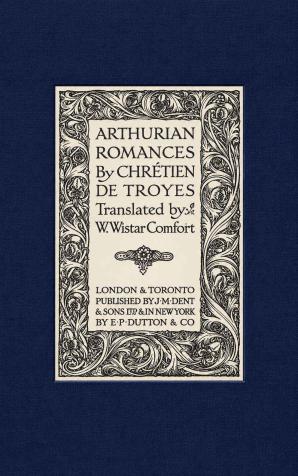
"Alis," he says, "may God confound me if the matter is thus allowed to stand. +2
religion
Que Dieu me confonde !
Un serment invoquant une punition divine pour souligner la sincérité du locuteur.
Four Arthurian Romances
"Four Arthurian Romances" by Chrétien de Troyes is a collection of medieval narratives written in the latter part of the 12th century. This work encompasses the stories of four heroes: Erec, Cligés, Yvain, and Lancelot, each exploring the themes of chivalry, romance, and adventure intertwined with the sophisticated ideals of courtly love. The romances reflect the rich tapestry of Arthurian legend, showcasing knights undertaking noble quests and engaging in battles for honor and love. The opening of "Four Arthurian Romances" introduces the tale of Erec and Enide, beginning with King Arthur's court and the announcement of a hunt for the elusive White Stag, which involves a significant and potentially troublesome tradition. Erec, a prominent knight, is drawn into conflict after a dwarf and a knight insult and strike a damsel at the court. Following this assault, Erec seeks to avenge the honor of the lady, embarking on a quest that leads him through various perils and encounters. His journey sets the stage for themes of valor and love as Erec strives to prove himself worthy, ultimately leading to his romantic involvement with Enide and the promise of her marriage. The romance illustrates not just action and adventure, but also explores the emotional and social dynamics of courtly life in a quintessential chivalric manner.
it should conceptually not be confounded with ‘the rule of law’in the sense of the common law system +1
law
confondre
assimiler
Le texte met en garde contre le fait de traiter le principe allemand de l’État de droit comme identique au concept de common law.
National Constitutions in European and Global Governance: Democracy, Rights, the Rule of Law: National Reports
This two-volume book, published open access, brings together leading scholars of constitutional law from twenty-nine European countries to revisit the role of national constitutions at a time when decision-making has increasingly shifted to the European and transnational level. It offers important insights into three areas. First, it explores how constitutions reflect the transfer of powers from domestic to European and global institutions. Secondly, it revisits substantive constitutional values, such as the protection of constitutional rights, the rule of law, democratic participation and constitutional review, along with constitutional court judgments that tackle the protection of these rights and values in the transnational context, e.g. with regard to the Data Retention Directive, the European Arrest Warrant, the ESM Treaty, and EU and IMF austerity measures. The responsiveness of the ECJ regarding the above rights and values, along with the standard of protection, is also assessed.

mayhap confound, the reader unfamiliar with mediaeval literary craft +1
emotion
déconcerter profondément
consterner
La Reine veut troubler et déstabiliser émotionnellement Lancelot en refusant de répondre.
Four Arthurian Romances
"Four Arthurian Romances" by Chrétien de Troyes is a collection of medieval narratives written in the latter part of the 12th century. This work encompasses the stories of four heroes: Erec, Cligés, Yvain, and Lancelot, each exploring the themes of chivalry, romance, and adventure intertwined with the sophisticated ideals of courtly love. The romances reflect the rich tapestry of Arthurian legend, showcasing knights undertaking noble quests and engaging in battles for honor and love. The opening of "Four Arthurian Romances" introduces the tale of Erec and Enide, beginning with King Arthur's court and the announcement of a hunt for the elusive White Stag, which involves a significant and potentially troublesome tradition. Erec, a prominent knight, is drawn into conflict after a dwarf and a knight insult and strike a damsel at the court. Following this assault, Erec seeks to avenge the honor of the lady, embarking on a quest that leads him through various perils and encounters. His journey sets the stage for themes of valor and love as Erec strives to prove himself worthy, ultimately leading to his romantic involvement with Enide and the promise of her marriage. The romance illustrates not just action and adventure, but also explores the emotional and social dynamics of courtly life in a quintessential chivalric manner.
There is also a widespread consensus amongst scholars and in the jurisprudence that the act of ‘transferring’sovereign powers must not be confounded with cession (in rem) – a conception that would end up construing public authority at the EU level as a mosaic of national, cumulatively limited sovereign powers.
law
ne doit pas être confondu avec la cession
Indique que le transfert de pouvoirs souverains doit être distingué de la cession.
National Constitutions in European and Global Governance: Democracy, Rights, the Rule of Law: National Reports
This two-volume book, published open access, brings together leading scholars of constitutional law from twenty-nine European countries to revisit the role of national constitutions at a time when decision-making has increasingly shifted to the European and transnational level. It offers important insights into three areas. First, it explores how constitutions reflect the transfer of powers from domestic to European and global institutions. Secondly, it revisits substantive constitutional values, such as the protection of constitutional rights, the rule of law, democratic participation and constitutional review, along with constitutional court judgments that tackle the protection of these rights and values in the transnational context, e.g. with regard to the Data Retention Directive, the European Arrest Warrant, the ESM Treaty, and EU and IMF austerity measures. The responsiveness of the ECJ regarding the above rights and values, along with the standard of protection, is also assessed.
While the latter can linguistically be translated by the term ‘the rule of law’, it should conceptually not be confounded with ‘the rule of law’in the sense of the common law system (for the Rechtsstaatsprinzip, see in more detail Sect.
law
être confondu avec
Être pris pour autre chose ou considéré comme équivalent à autre chose ; ici, le texte met en garde contre l’assimilation de deux concepts juridiques.
National Constitutions in European and Global Governance: Democracy, Rights, the Rule of Law: National Reports
This two-volume book, published open access, brings together leading scholars of constitutional law from twenty-nine European countries to revisit the role of national constitutions at a time when decision-making has increasingly shifted to the European and transnational level. It offers important insights into three areas. First, it explores how constitutions reflect the transfer of powers from domestic to European and global institutions. Secondly, it revisits substantive constitutional values, such as the protection of constitutional rights, the rule of law, democratic participation and constitutional review, along with constitutional court judgments that tackle the protection of these rights and values in the transnational context, e.g. with regard to the Data Retention Directive, the European Arrest Warrant, the ESM Treaty, and EU and IMF austerity measures. The responsiveness of the ECJ regarding the above rights and values, along with the standard of protection, is also assessed.
Indeed, in that these events are not entirely of Nature (whatever that might be), they confound the very idea of ‘Nature writing’or ecological writing: they are instances, rather, of the uncanny intimacy of our relationship with the non-human (43).
literature
ébranler
remettre en cause
déstabiliser
Les événements remettent en question et déstabilisent l’idée établie de l’écriture de la nature.
Environmental Humanities in India
This collection examines environmental questions in India through literature, culture, Indigenous knowledge and the arts. Its essays explore relationships between people and landscapes, conservation, ecological justice and representations of environmental change.

who were no less confounded at seeing the near approach of the Smeaton
general
déconcerté
stupéfait
Ici, le mot décrit les personnes sur le rocher comme déconcertées par l’approche rapprochée du navire.
Records of a Family of Engineers
"Records of a Family of Engineers" by Robert Louis Stevenson is a historical account written in the early 20th century. The book delves into the lineage of the Stevenson family, particularly focusing on their contributions as engineers and their experiences across generations in Scotland, intertwining personal anecdotes with broader historical narratives. The opening of the book introduces the reader to the Stevenson family tree, tracing their surname's evolution and historical context from the 13th century onward. It reveals a lineage that has faced both successes and tragedies, with a particular focus on the early lives of James Stevenson, his brother Hugh, and their heir, Robert Stevenson. The text sketches their aspirations, marriages, and struggles, ultimately painting a portrait of a family deeply rooted in the engineering profession, set against the backdrop of the rugged Scottish landscape and societal changes of their time. This initial section not only captures the essence of their individual experiences but sets the stage for further exploration of the family's lasting impact on engineering.

the story of Scottish nomenclature is confounded by a continual process
linguistics
compliquer
obscurcir
embrouiller
L’histoire des noms écossais est rendue difficile à comprendre par des traductions répétées et partielles.
Records of a Family of Engineers
"Records of a Family of Engineers" by Robert Louis Stevenson is a historical account written in the early 20th century. The book delves into the lineage of the Stevenson family, particularly focusing on their contributions as engineers and their experiences across generations in Scotland, intertwining personal anecdotes with broader historical narratives. The opening of the book introduces the reader to the Stevenson family tree, tracing their surname's evolution and historical context from the 13th century onward. It reveals a lineage that has faced both successes and tragedies, with a particular focus on the early lives of James Stevenson, his brother Hugh, and their heir, Robert Stevenson. The text sketches their aspirations, marriages, and struggles, ultimately painting a portrait of a family deeply rooted in the engineering profession, set against the backdrop of the rugged Scottish landscape and societal changes of their time. This initial section not only captures the essence of their individual experiences but sets the stage for further exploration of the family's lasting impact on engineering.
Confounded be the man who first constructed a house in this neighbourhood, and all those who built this town!
history
maudit
Ici, l’archaïque « confounded » est une malédiction signifiant « damné », et non simplement « confus ».
Four Arthurian Romances
"Four Arthurian Romances" by Chrétien de Troyes is a collection of medieval narratives written in the latter part of the 12th century. This work encompasses the stories of four heroes: Erec, Cligés, Yvain, and Lancelot, each exploring the themes of chivalry, romance, and adventure intertwined with the sophisticated ideals of courtly love. The romances reflect the rich tapestry of Arthurian legend, showcasing knights undertaking noble quests and engaging in battles for honor and love. The opening of "Four Arthurian Romances" introduces the tale of Erec and Enide, beginning with King Arthur's court and the announcement of a hunt for the elusive White Stag, which involves a significant and potentially troublesome tradition. Erec, a prominent knight, is drawn into conflict after a dwarf and a knight insult and strike a damsel at the court. Following this assault, Erec seeks to avenge the honor of the lady, embarking on a quest that leads him through various perils and encounters. His journey sets the stage for themes of valor and love as Erec strives to prove himself worthy, ultimately leading to his romantic involvement with Enide and the promise of her marriage. The romance illustrates not just action and adventure, but also explores the emotional and social dynamics of courtly life in a quintessential chivalric manner.
confound me, if there is not as good a knight, or even a better one than he!
literature
Parbleu !
Un serment archaïque exprimant la surprise, la colère ou l'emphase.
Four Arthurian Romances
"Four Arthurian Romances" by Chrétien de Troyes is a collection of medieval narratives written in the latter part of the 12th century. This work encompasses the stories of four heroes: Erec, Cligés, Yvain, and Lancelot, each exploring the themes of chivalry, romance, and adventure intertwined with the sophisticated ideals of courtly love. The romances reflect the rich tapestry of Arthurian legend, showcasing knights undertaking noble quests and engaging in battles for honor and love. The opening of "Four Arthurian Romances" introduces the tale of Erec and Enide, beginning with King Arthur's court and the announcement of a hunt for the elusive White Stag, which involves a significant and potentially troublesome tradition. Erec, a prominent knight, is drawn into conflict after a dwarf and a knight insult and strike a damsel at the court. Following this assault, Erec seeks to avenge the honor of the lady, embarking on a quest that leads him through various perils and encounters. His journey sets the stage for themes of valor and love as Erec strives to prove himself worthy, ultimately leading to his romantic involvement with Enide and the promise of her marriage. The romance illustrates not just action and adventure, but also explores the emotional and social dynamics of courtly life in a quintessential chivalric manner.
Confounded be the man who first constructed a house in this neighbourhood
general
Maudit soit l’homme qui
Une malédiction archaïque souhaitant le malheur à la personne responsable de quelque chose.
Four Arthurian Romances
"Four Arthurian Romances" by Chrétien de Troyes is a collection of medieval narratives written in the latter part of the 12th century. This work encompasses the stories of four heroes: Erec, Cligés, Yvain, and Lancelot, each exploring the themes of chivalry, romance, and adventure intertwined with the sophisticated ideals of courtly love. The romances reflect the rich tapestry of Arthurian legend, showcasing knights undertaking noble quests and engaging in battles for honor and love. The opening of "Four Arthurian Romances" introduces the tale of Erec and Enide, beginning with King Arthur's court and the announcement of a hunt for the elusive White Stag, which involves a significant and potentially troublesome tradition. Erec, a prominent knight, is drawn into conflict after a dwarf and a knight insult and strike a damsel at the court. Following this assault, Erec seeks to avenge the honor of the lady, embarking on a quest that leads him through various perils and encounters. His journey sets the stage for themes of valor and love as Erec strives to prove himself worthy, ultimately leading to his romantic involvement with Enide and the promise of her marriage. The romance illustrates not just action and adventure, but also explores the emotional and social dynamics of courtly life in a quintessential chivalric manner.