Inserisci la parola da cercare
bracketing
UK
/ˈbrækɪtɪŋ/
US
/ˈbrækɪtɪŋ/
Biblioteca
by metal brackets +2
woodworking
équerre
Ces ferrures métalliques fixent le fond de la boîte à ses poteaux.
Mission Furniture: How to Make It, Part 3
"Mission Furniture: How to Make It, Part 3" by H. H. Windsor is a practical handbook written in the early 20th century, specifically in 1912. This instructional guide falls under the genre of DIY (Do It Yourself) manuals, focusing on the craftsmanship of mission-style furniture. It is part of a series published under the Popular Mechanics brand, indicating an emphasis on accessible, easily understood information for woodworking enthusiasts of varying skill levels. The opening portion of the book introduces the reader to various projects involved in building mission-style furniture. It outlines the materials and dimensions required for constructing different pieces, including a piano bench, library table, princess dresser, sewing box, and fern stand, among others. Each piece includes detailed instructions on measuring, cutting, and assembling, showcasing Windsor's intention to empower readers to create their own furniture at home. This section serves as an introduction to the comprehensive guidance on crafting that follows in the subsequent chapters, appealing to both novice and experienced woodworkers.

the bracket for holding the magnets +2
engineering
support
Désigne le support utilisé pour maintenir les aimants de la cloche.
Electricity for Boys
"Electricity for Boys" by James Slough Zerbe is a practical guide written in the early 20th century. This work falls within the category of educational publications aimed at teaching young boys the fundamental concepts and applications of electricity through hands-on experiments. It emphasizes the importance of practical experience and experimentation over theoretical knowledge alone. The beginning of the text introduces the fascinating world of electricity, stressing the value of learning through practical application while experimenting with various tools and techniques. Zerbe explains that electricity can be understood better when boys engage directly with the material rather than through rote memorization of its principles. He lays out the book's fundamental approach to education, which involves experimenting, building, and discovering the principles that govern electrical phenomena. This foundational philosophy sets the stage for the more detailed chapters on specific electrical concepts and devices, reflecting a broader goal of fostering critical thinking and hands-on learning among young readers.

The lower end can be cut out with a bracket saw. +1
woodworking
découper à la scie à archet
Façonner une pièce en la découpant dans le matériau à l’aide d’une scie à archet.
Mission Furniture: How to Make It, Part 3
"Mission Furniture: How to Make It, Part 3" by H. H. Windsor is a practical handbook written in the early 20th century, specifically in 1912. This instructional guide falls under the genre of DIY (Do It Yourself) manuals, focusing on the craftsmanship of mission-style furniture. It is part of a series published under the Popular Mechanics brand, indicating an emphasis on accessible, easily understood information for woodworking enthusiasts of varying skill levels. The opening portion of the book introduces the reader to various projects involved in building mission-style furniture. It outlines the materials and dimensions required for constructing different pieces, including a piano bench, library table, princess dresser, sewing box, and fern stand, among others. Each piece includes detailed instructions on measuring, cutting, and assembling, showcasing Windsor's intention to empower readers to create their own furniture at home. This section serves as an introduction to the comprehensive guidance on crafting that follows in the subsequent chapters, appealing to both novice and experienced woodworkers.
Nogueira de Brito M. (2014) Putting Social Rights in Brackets?
law
mise à l’écart
relégation
Dans le titre, « mettre les droits sociaux entre parenthèses » est une expression figurée : elle suggère de reléguer ces droits ou de les mettre de côté, et non d’utiliser littéralement des signes de ponctuation.
National Constitutions in European and Global Governance: Democracy, Rights, the Rule of Law: National Reports
This two-volume book, published open access, brings together leading scholars of constitutional law from twenty-nine European countries to revisit the role of national constitutions at a time when decision-making has increasingly shifted to the European and transnational level. It offers important insights into three areas. First, it explores how constitutions reflect the transfer of powers from domestic to European and global institutions. Secondly, it revisits substantive constitutional values, such as the protection of constitutional rights, the rule of law, democratic participation and constitutional review, along with constitutional court judgments that tackle the protection of these rights and values in the transnational context, e.g. with regard to the Data Retention Directive, the European Arrest Warrant, the ESM Treaty, and EU and IMF austerity measures. The responsiveness of the ECJ regarding the above rights and values, along with the standard of protection, is also assessed.

a reduction of tax brackets
taxation
tranche d’imposition
tranche fiscale
Dans « tax brackets », le mot désigne des tranches d’un barème fiscal, et non des signes de ponctuation.
National Constitutions in European and Global Governance: Democracy, Rights, the Rule of Law: National Reports
This two-volume book, published open access, brings together leading scholars of constitutional law from twenty-nine European countries to revisit the role of national constitutions at a time when decision-making has increasingly shifted to the European and transnational level. It offers important insights into three areas. First, it explores how constitutions reflect the transfer of powers from domestic to European and global institutions. Secondly, it revisits substantive constitutional values, such as the protection of constitutional rights, the rule of law, democratic participation and constitutional review, along with constitutional court judgments that tackle the protection of these rights and values in the transnational context, e.g. with regard to the Data Retention Directive, the European Arrest Warrant, the ESM Treaty, and EU and IMF austerity measures. The responsiveness of the ECJ regarding the above rights and values, along with the standard of protection, is also assessed.
Enarson and Pease (2016, xviii) have critically reflected on the normative aspect of disasters bracketing out the ‘unheard voices’of a disaster.
disaster
écarter
exclure
Exclure ou mettre de côté certaines personnes ou perspectives sans en tenir compte ; ici, cela désigne les voix liées aux catastrophes qui ne sont pas entendues.
Disasters: Core Concepts and Ethical Theories
This Open Access Book is the first to examine disasters from a multidisciplinary perspective. Justification of actions in the face of disasters requires recourse both to conceptual analysis and ethical traditions. Part 1 of the book contains chapters on how disasters are conceptualized in different academic disciplines relevant to disasters. Part 2 has chapters on how ethical issues that arise in relation to disasters can be addressed from a number of fundamental normative approaches in moral and political philosophy. This book sets the stage for more focused normative debates given that no one book can be completely comprehensive.

Midway between its ends is a cross hole, to receive the pivot pin (B), which also passes through a pair of metal brackets (C, D), the bracket C having a screw to hold one of the line wires, and the other bracket having a metal switch (E) hinged thereto.
telegraphy
paire de supports métalliques
Deux supports métalliques qui maintiennent ou fixent des pièces de l’appareil.
Electricity for Boys
"Electricity for Boys" by James Slough Zerbe is a practical guide written in the early 20th century. This work falls within the category of educational publications aimed at teaching young boys the fundamental concepts and applications of electricity through hands-on experiments. It emphasizes the importance of practical experience and experimentation over theoretical knowledge alone. The beginning of the text introduces the fascinating world of electricity, stressing the value of learning through practical application while experimenting with various tools and techniques. Zerbe explains that electricity can be understood better when boys engage directly with the material rather than through rote memorization of its principles. He lays out the book's fundamental approach to education, which involves experimenting, building, and discovering the principles that govern electrical phenomena. This foundational philosophy sets the stage for the more detailed chapters on specific electrical concepts and devices, reflecting a broader goal of fostering critical thinking and hands-on learning among young readers.
A bracketed explanation written later is not a sentence spoken during the landing.
publishing
entre crochets
entre parenthèses
Indique que l’explication est signalée comme un ajout plutôt que comme un dialogue prononcé.
A Landing in Short Messages
Annotate the short linked NASA landing transcript window and present a source-based sequence explanation using speaker, order and communication function.
the wooden brackets that support them
construction
équerre
Les équerres sont des supports structurels qui soutiennent les étagères.
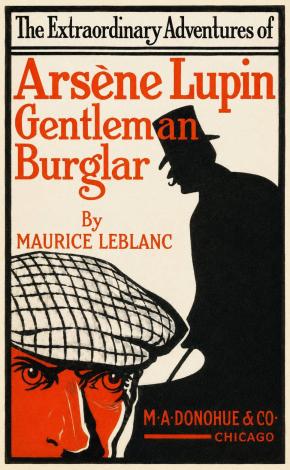
The Extraordinary Adventures of Arsène Lupin, Gentleman-Burglar
"The Extraordinary Adventures of Arsène Lupin, Gentleman-Burglar" by Maurice Leblanc is a collection of stories published in 1907. This debut collection introduces the charming and cunning Arsène Lupin, a master thief who outsmarts police and high society alike. Through nine tales of daring heists, clever disguises, and audacious escapes, Lupin proves himself an unmatched criminal genius. From shipboard robberies to prison breaks, he taunts authorities—including a famous English detective—while stealing priceless treasures with impeccable style and wit.