


Inserisci la parola da cercare
biting
UK
/ˈbaɪ.tɪŋ/
US
/ˈbaɪ.tɪŋ/
Biblioteca
TEU) may well have some bite in this context. +1
law
реальная сила
действенность
Выражение «justiciable bite» употреблено переносно: принцип имел бы практические юридические последствия.
National Constitutions in European and Global Governance: Democracy, Rights, the Rule of Law: National Reports
This two-volume book, published open access, brings together leading scholars of constitutional law from twenty-nine European countries to revisit the role of national constitutions at a time when decision-making has increasingly shifted to the European and transnational level. It offers important insights into three areas. First, it explores how constitutions reflect the transfer of powers from domestic to European and global institutions. Secondly, it revisits substantive constitutional values, such as the protection of constitutional rights, the rule of law, democratic participation and constitutional review, along with constitutional court judgments that tackle the protection of these rights and values in the transnational context, e.g. with regard to the Data Retention Directive, the European Arrest Warrant, the ESM Treaty, and EU and IMF austerity measures. The responsiveness of the ECJ regarding the above rights and values, along with the standard of protection, is also assessed.

It intimated that the rule of law was too grand a concept to have practical justiciable bite.
law
реальная возможность судебного применения
Практическая сила или действие принципа, который может применяться судом.
National Constitutions in European and Global Governance: Democracy, Rights, the Rule of Law: National Reports
This two-volume book, published open access, brings together leading scholars of constitutional law from twenty-nine European countries to revisit the role of national constitutions at a time when decision-making has increasingly shifted to the European and transnational level. It offers important insights into three areas. First, it explores how constitutions reflect the transfer of powers from domestic to European and global institutions. Secondly, it revisits substantive constitutional values, such as the protection of constitutional rights, the rule of law, democratic participation and constitutional review, along with constitutional court judgments that tackle the protection of these rights and values in the transnational context, e.g. with regard to the Data Retention Directive, the European Arrest Warrant, the ESM Treaty, and EU and IMF austerity measures. The responsiveness of the ECJ regarding the above rights and values, along with the standard of protection, is also assessed.
TEU) may well have some bite in this context.
law
иметь реальную силу
Иметь практический эффект или юридическую силу, а не быть лишь символическим положением.
National Constitutions in European and Global Governance: Democracy, Rights, the Rule of Law: National Reports
This two-volume book, published open access, brings together leading scholars of constitutional law from twenty-nine European countries to revisit the role of national constitutions at a time when decision-making has increasingly shifted to the European and transnational level. It offers important insights into three areas. First, it explores how constitutions reflect the transfer of powers from domestic to European and global institutions. Secondly, it revisits substantive constitutional values, such as the protection of constitutional rights, the rule of law, democratic participation and constitutional review, along with constitutional court judgments that tackle the protection of these rights and values in the transnational context, e.g. with regard to the Data Retention Directive, the European Arrest Warrant, the ESM Treaty, and EU and IMF austerity measures. The responsiveness of the ECJ regarding the above rights and values, along with the standard of protection, is also assessed.
biting wit of Galileo
literature
язвительный
Характеризует остроумие Галилея как резкое и меткое.
The Advance of Science in the Last Half-Century
"The Advance of Science in the Last Half-Century" by Thomas Henry Huxley is a scientific publication written in the late 19th century. The work examines the significant advancements in physical science, technology, and their impact on civilization over the past fifty years, showcasing how these developments have transformed human life and understanding. Huxley aims to provide a comprehensive overview of scientific progress and its implications for society. The opening of this publication sets the stage by reflecting upon the remarkable increase in industrial production and the pivotal role of physical science during the Victorian era. Huxley outlines how machinery and improved techniques have elevated living standards and mitigated suffering from diseases and scarcity. He discusses the historical context of scientific inquiry, highlighting the evolution of natural knowledge since ancient Greece and the importance of hypotheses in driving scientific progress. The beginning emphasizes the interconnectedness of scientific advancements with industrial growth and societal changes, asserting that the pursuit of knowledge has been, and should be, an intrinsic motivation beyond mere utilitarian outcomes.

The literary skill and biting wit of Galileo had made scientific questions attractive to the public.
rhetoric
язвительное остроумие
Острое, часто насмешливое остроумие.
The Advance of Science in the Last Half-Century
"The Advance of Science in the Last Half-Century" by Thomas Henry Huxley is a scientific publication written in the late 19th century. The work examines the significant advancements in physical science, technology, and their impact on civilization over the past fifty years, showcasing how these developments have transformed human life and understanding. Huxley aims to provide a comprehensive overview of scientific progress and its implications for society. The opening of this publication sets the stage by reflecting upon the remarkable increase in industrial production and the pivotal role of physical science during the Victorian era. Huxley outlines how machinery and improved techniques have elevated living standards and mitigated suffering from diseases and scarcity. He discusses the historical context of scientific inquiry, highlighting the evolution of natural knowledge since ancient Greece and the importance of hypotheses in driving scientific progress. The beginning emphasizes the interconnectedness of scientific advancements with industrial growth and societal changes, asserting that the pursuit of knowledge has been, and should be, an intrinsic motivation beyond mere utilitarian outcomes.
the bite of the hawser thrown over the cross-head
nautical
петля троса
В этом морском значении bite — петля троса, которую накидывают на поперечину.
Records of a Family of Engineers
"Records of a Family of Engineers" by Robert Louis Stevenson is a historical account written in the early 20th century. The book delves into the lineage of the Stevenson family, particularly focusing on their contributions as engineers and their experiences across generations in Scotland, intertwining personal anecdotes with broader historical narratives. The opening of the book introduces the reader to the Stevenson family tree, tracing their surname's evolution and historical context from the 13th century onward. It reveals a lineage that has faced both successes and tragedies, with a particular focus on the early lives of James Stevenson, his brother Hugh, and their heir, Robert Stevenson. The text sketches their aspirations, marriages, and struggles, ultimately painting a portrait of a family deeply rooted in the engineering profession, set against the backdrop of the rugged Scottish landscape and societal changes of their time. This initial section not only captures the essence of their individual experiences but sets the stage for further exploration of the family's lasting impact on engineering.

Such a cruel bite thou hast never inflicted upon the world!
literature
укус
Укус здесь метафорический: нападение смерти представлено как жестокая рана, нанесённая миру.
Four Arthurian Romances
"Four Arthurian Romances" by Chrétien de Troyes is a collection of medieval narratives written in the latter part of the 12th century. This work encompasses the stories of four heroes: Erec, Cligés, Yvain, and Lancelot, each exploring the themes of chivalry, romance, and adventure intertwined with the sophisticated ideals of courtly love. The romances reflect the rich tapestry of Arthurian legend, showcasing knights undertaking noble quests and engaging in battles for honor and love. The opening of "Four Arthurian Romances" introduces the tale of Erec and Enide, beginning with King Arthur's court and the announcement of a hunt for the elusive White Stag, which involves a significant and potentially troublesome tradition. Erec, a prominent knight, is drawn into conflict after a dwarf and a knight insult and strike a damsel at the court. Following this assault, Erec seeks to avenge the honor of the lady, embarking on a quest that leads him through various perils and encounters. His journey sets the stage for themes of valor and love as Erec strives to prove himself worthy, ultimately leading to his romantic involvement with Enide and the promise of her marriage. The romance illustrates not just action and adventure, but also explores the emotional and social dynamics of courtly life in a quintessential chivalric manner.
There was a short silence, and then Syme said, biting his beard—
literature
кусать свою бороду
Кусать бороду — литературный жест, указывающий на волнение или напряжённые размышления.
The Man Who Was Thursday: A Nightmare
"The Man Who Was Thursday: A Nightmare" by G. K. Chesterton is a philosophical novel with elements of adventure and satire, written in the late 19th century. The story revolves around the enigmatic character Gabriel Syme, a police detective who infiltrates a group of anarchists in London to uncover their plans and identities. As the narrative unfolds, it explores complex themes of order, chaos, and the nature of evil, often through witty dialogue and absurd situations that challenge conventional thinking. At the start of the novel, readers are introduced to the suburb of Saffron Park, with its colorful and eccentric inhabitants, primarily poets and artists. One evening, during a striking sunset, the anarchistic poet Lucian Gregory meets Gabriel Syme, who surprises him with bold arguments in favor of law and order, challenging Gregory's views. Their conversation escalates into a duel of ideologies when Gregory reveals his deep commitment to anarchism, which leads to a confrontation between the two. In a twist of fate, Syme's true identity as a detective is disclosed, and as he joins the anarchists disguised as one of them, the stage is set for a profound exploration of the philosophical conflict between chaos and structure in society.

And at the very word Sunday he bit his lip; the word was henceforth for hire like some indecent pun.
general
прикусить губу
Сдержать эмоциональную реакцию или не дать себе заговорить.
The Man Who Was Thursday: A Nightmare
"The Man Who Was Thursday: A Nightmare" by G. K. Chesterton is a philosophical novel with elements of adventure and satire, written in the late 19th century. The story revolves around the enigmatic character Gabriel Syme, a police detective who infiltrates a group of anarchists in London to uncover their plans and identities. As the narrative unfolds, it explores complex themes of order, chaos, and the nature of evil, often through witty dialogue and absurd situations that challenge conventional thinking. At the start of the novel, readers are introduced to the suburb of Saffron Park, with its colorful and eccentric inhabitants, primarily poets and artists. One evening, during a striking sunset, the anarchistic poet Lucian Gregory meets Gabriel Syme, who surprises him with bold arguments in favor of law and order, challenging Gregory's views. Their conversation escalates into a duel of ideologies when Gregory reveals his deep commitment to anarchism, which leads to a confrontation between the two. In a twist of fate, Syme's true identity as a detective is disclosed, and as he joins the anarchists disguised as one of them, the stage is set for a profound exploration of the philosophical conflict between chaos and structure in society.
I have often wondered,” said the Marquis, taking a great bite out of a slice of bread and jam, “whether it wouldn’t be better for me to do it with a knife.
food
откусить кусок от
Укусить еду и откусить от неё кусок.
The Man Who Was Thursday: A Nightmare
"The Man Who Was Thursday: A Nightmare" by G. K. Chesterton is a philosophical novel with elements of adventure and satire, written in the late 19th century. The story revolves around the enigmatic character Gabriel Syme, a police detective who infiltrates a group of anarchists in London to uncover their plans and identities. As the narrative unfolds, it explores complex themes of order, chaos, and the nature of evil, often through witty dialogue and absurd situations that challenge conventional thinking. At the start of the novel, readers are introduced to the suburb of Saffron Park, with its colorful and eccentric inhabitants, primarily poets and artists. One evening, during a striking sunset, the anarchistic poet Lucian Gregory meets Gabriel Syme, who surprises him with bold arguments in favor of law and order, challenging Gregory's views. Their conversation escalates into a duel of ideologies when Gregory reveals his deep commitment to anarchism, which leads to a confrontation between the two. In a twist of fate, Syme's true identity as a detective is disclosed, and as he joins the anarchists disguised as one of them, the stage is set for a profound exploration of the philosophical conflict between chaos and structure in society.
I bit my lips until they ran blood.
body
кусать
Говорящий кусает собственные губы, по-видимому, чтобы терпеть боль или молчать.
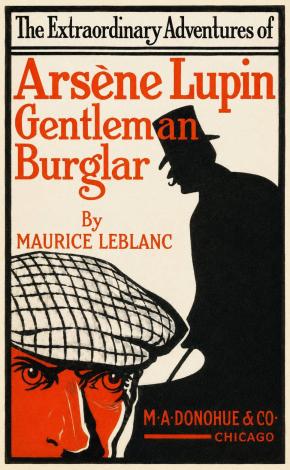
The Extraordinary Adventures of Arsène Lupin, Gentleman-Burglar
"The Extraordinary Adventures of Arsène Lupin, Gentleman-Burglar" by Maurice Leblanc is a collection of stories published in 1907. This debut collection introduces the charming and cunning Arsène Lupin, a master thief who outsmarts police and high society alike. Through nine tales of daring heists, clever disguises, and audacious escapes, Lupin proves himself an unmatched criminal genius. From shipboard robberies to prison breaks, he taunts authorities—including a famous English detective—while stealing priceless treasures with impeccable style and wit.
the fish — I mean Cahorn — will not bite
deception
клюнуть на уловку
В переносном смысле bite означает принять приманку и попасться на уловку.
The Extraordinary Adventures of Arsène Lupin, Gentleman-Burglar
"The Extraordinary Adventures of Arsène Lupin, Gentleman-Burglar" by Maurice Leblanc is a collection of stories published in 1907. This debut collection introduces the charming and cunning Arsène Lupin, a master thief who outsmarts police and high society alike. Through nine tales of daring heists, clever disguises, and audacious escapes, Lupin proves himself an unmatched criminal genius. From shipboard robberies to prison breaks, he taunts authorities—including a famous English detective—while stealing priceless treasures with impeccable style and wit.