


Inserisci la parola da cercare
deadly
UK
/ˈdɛdli/
US
/ˈdɛdli/
Biblioteca
The deadliest poison that ever was heard tell of. +2
medicine
самый смертоносный
смертельнейший
непримиримый
смертельный
Deadly подчёркивает, что враг опасен и может оказаться смертельным противником.
King Arthur and the Knights of the Round Table
"King Arthur and the Knights of the Round Table" by Sir Thomas Malory is a prose compilation written around 1470. This Middle English work weaves together legendary tales of King Arthur, Guinevere, Lancelot, Merlin, and the Knights of the Round Table. Malory assembled and reworked material from various French and English sources to create a complete narrative spanning Arthur's conception to his death. The compilation includes the quest for the Holy Grail and the legend of Tristan and Iseult, creating one of the most influential works of Arthurian literature.

Whether one may flee from a deadly plague.
medicine
смертельный
Описывает серьёзную опасность, которую представляла чума.
Disasters: Core Concepts and Ethical Theories
This Open Access Book is the first to examine disasters from a multidisciplinary perspective. Justification of actions in the face of disasters requires recourse both to conceptual analysis and ethical traditions. Part 1 of the book contains chapters on how disasters are conceptualized in different academic disciplines relevant to disasters. Part 2 has chapters on how ethical issues that arise in relation to disasters can be addressed from a number of fundamental normative approaches in moral and political philosophy. This book sets the stage for more focused normative debates given that no one book can be completely comprehensive.

Whether one may flee from a deadly plague.
history
спасаться бегством от смертельной чумы
Спасаться от опасной эпидемии.
Disasters: Core Concepts and Ethical Theories
This Open Access Book is the first to examine disasters from a multidisciplinary perspective. Justification of actions in the face of disasters requires recourse both to conceptual analysis and ethical traditions. Part 1 of the book contains chapters on how disasters are conceptualized in different academic disciplines relevant to disasters. Part 2 has chapters on how ethical issues that arise in relation to disasters can be addressed from a number of fundamental normative approaches in moral and political philosophy. This book sets the stage for more focused normative debates given that no one book can be completely comprehensive.
This can become a deadly problem when detecting earthquakes.
seismology
смертельно опасный
Описывает возможные тяжёлые последствия проблемы, связанной с землетрясением.
The AI City
This book develops the concept of an artificial intelligence city and examines its theoretical foundations, technologies and applications. Practical cases explore how urban planning and intelligent systems can support city development, services and management.

The films have focused on the deadly consequences of climate change.
environment
смертоносные последствия изменения климата
Смертельные или угрожающие жизни последствия изменения климата.
Environmental Humanities in India
This collection examines environmental questions in India through literature, culture, Indigenous knowledge and the arts. Its essays explore relationships between people and landscapes, conservation, ecological justice and representations of environmental change.

hated him with deadly hate
general
смертельный
В сочетании deadly hate слово deadly употреблено переносно и усиливает значение ненависти до «смертельной» или непримиримой.
Four Arthurian Romances
"Four Arthurian Romances" by Chrétien de Troyes is a collection of medieval narratives written in the latter part of the 12th century. This work encompasses the stories of four heroes: Erec, Cligés, Yvain, and Lancelot, each exploring the themes of chivalry, romance, and adventure intertwined with the sophisticated ideals of courtly love. The romances reflect the rich tapestry of Arthurian legend, showcasing knights undertaking noble quests and engaging in battles for honor and love. The opening of "Four Arthurian Romances" introduces the tale of Erec and Enide, beginning with King Arthur's court and the announcement of a hunt for the elusive White Stag, which involves a significant and potentially troublesome tradition. Erec, a prominent knight, is drawn into conflict after a dwarf and a knight insult and strike a damsel at the court. Following this assault, Erec seeks to avenge the honor of the lady, embarking on a quest that leads him through various perils and encounters. His journey sets the stage for themes of valor and love as Erec strives to prove himself worthy, ultimately leading to his romantic involvement with Enide and the promise of her marriage. The romance illustrates not just action and adventure, but also explores the emotional and social dynamics of courtly life in a quintessential chivalric manner.
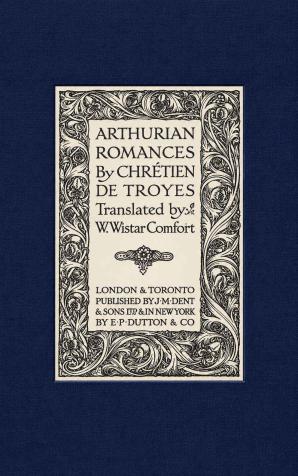
This seneschal had Lancelot in his keeping, for to him he had been entrusted by his enemy Meleagant, who hated him with deadly hate.
literature
со смертельной ненавистью
С крайней, возможно убийственной ненавистью.
Four Arthurian Romances
"Four Arthurian Romances" by Chrétien de Troyes is a collection of medieval narratives written in the latter part of the 12th century. This work encompasses the stories of four heroes: Erec, Cligés, Yvain, and Lancelot, each exploring the themes of chivalry, romance, and adventure intertwined with the sophisticated ideals of courtly love. The romances reflect the rich tapestry of Arthurian legend, showcasing knights undertaking noble quests and engaging in battles for honor and love. The opening of "Four Arthurian Romances" introduces the tale of Erec and Enide, beginning with King Arthur's court and the announcement of a hunt for the elusive White Stag, which involves a significant and potentially troublesome tradition. Erec, a prominent knight, is drawn into conflict after a dwarf and a knight insult and strike a damsel at the court. Following this assault, Erec seeks to avenge the honor of the lady, embarking on a quest that leads him through various perils and encounters. His journey sets the stage for themes of valor and love as Erec strives to prove himself worthy, ultimately leading to his romantic involvement with Enide and the promise of her marriage. The romance illustrates not just action and adventure, but also explores the emotional and social dynamics of courtly life in a quintessential chivalric manner.
But in all Syme’s circumstances, with the dark dawn and the deadly errand and the loneliness on the great dripping stones, there was something unnerving in it.
literature
смертельно опасное поручение
Задание или миссия, которая может привести к смерти.
The Man Who Was Thursday: A Nightmare
"The Man Who Was Thursday: A Nightmare" by G. K. Chesterton is a philosophical novel with elements of adventure and satire, written in the late 19th century. The story revolves around the enigmatic character Gabriel Syme, a police detective who infiltrates a group of anarchists in London to uncover their plans and identities. As the narrative unfolds, it explores complex themes of order, chaos, and the nature of evil, often through witty dialogue and absurd situations that challenge conventional thinking. At the start of the novel, readers are introduced to the suburb of Saffron Park, with its colorful and eccentric inhabitants, primarily poets and artists. One evening, during a striking sunset, the anarchistic poet Lucian Gregory meets Gabriel Syme, who surprises him with bold arguments in favor of law and order, challenging Gregory's views. Their conversation escalates into a duel of ideologies when Gregory reveals his deep commitment to anarchism, which leads to a confrontation between the two. In a twist of fate, Syme's true identity as a detective is disclosed, and as he joins the anarchists disguised as one of them, the stage is set for a profound exploration of the philosophical conflict between chaos and structure in society.

His face was deadly pale, so that by contrast his queer red hair looked almost scarlet.
general
мертвенно-бледный
Крайне бледный, часто из-за шока, болезни или страха.
The Man Who Was Thursday: A Nightmare
"The Man Who Was Thursday: A Nightmare" by G. K. Chesterton is a philosophical novel with elements of adventure and satire, written in the late 19th century. The story revolves around the enigmatic character Gabriel Syme, a police detective who infiltrates a group of anarchists in London to uncover their plans and identities. As the narrative unfolds, it explores complex themes of order, chaos, and the nature of evil, often through witty dialogue and absurd situations that challenge conventional thinking. At the start of the novel, readers are introduced to the suburb of Saffron Park, with its colorful and eccentric inhabitants, primarily poets and artists. One evening, during a striking sunset, the anarchistic poet Lucian Gregory meets Gabriel Syme, who surprises him with bold arguments in favor of law and order, challenging Gregory's views. Their conversation escalates into a duel of ideologies when Gregory reveals his deep commitment to anarchism, which leads to a confrontation between the two. In a twist of fate, Syme's true identity as a detective is disclosed, and as he joins the anarchists disguised as one of them, the stage is set for a profound exploration of the philosophical conflict between chaos and structure in society.
You do not think that in a deeper, a more deadly sense, I am serious.”
general
в более глубоком, более роковом смысле
В глубоко серьёзном и мрачном смысле, а не просто в поверхностном или обычном понимании.
The Man Who Was Thursday: A Nightmare
"The Man Who Was Thursday: A Nightmare" by G. K. Chesterton is a philosophical novel with elements of adventure and satire, written in the late 19th century. The story revolves around the enigmatic character Gabriel Syme, a police detective who infiltrates a group of anarchists in London to uncover their plans and identities. As the narrative unfolds, it explores complex themes of order, chaos, and the nature of evil, often through witty dialogue and absurd situations that challenge conventional thinking. At the start of the novel, readers are introduced to the suburb of Saffron Park, with its colorful and eccentric inhabitants, primarily poets and artists. One evening, during a striking sunset, the anarchistic poet Lucian Gregory meets Gabriel Syme, who surprises him with bold arguments in favor of law and order, challenging Gregory's views. Their conversation escalates into a duel of ideologies when Gregory reveals his deep commitment to anarchism, which leads to a confrontation between the two. In a twist of fate, Syme's true identity as a detective is disclosed, and as he joins the anarchists disguised as one of them, the stage is set for a profound exploration of the philosophical conflict between chaos and structure in society.
While in deadly sin to come into the presence of His flesh and blood.
religion
смертный
Deadly sin — богословский термин для тяжкого греха, губительного для души.
King Arthur and the Knights of the Round Table
"King Arthur and the Knights of the Round Table" by Sir Thomas Malory is a prose compilation written around 1470. This Middle English work weaves together legendary tales of King Arthur, Guinevere, Lancelot, Merlin, and the Knights of the Round Table. Malory assembled and reworked material from various French and English sources to create a complete narrative spanning Arthur's conception to his death. The compilation includes the quest for the Holy Grail and the legend of Tristan and Iseult, creating one of the most influential works of Arthurian literature.
While in deadly sin to come into the presence of His flesh and blood.
religion
в смертном грехе
В состоянии тяжкого греха согласно христианскому вероучению.
King Arthur and the Knights of the Round Table
"King Arthur and the Knights of the Round Table" by Sir Thomas Malory is a prose compilation written around 1470. This Middle English work weaves together legendary tales of King Arthur, Guinevere, Lancelot, Merlin, and the Knights of the Round Table. Malory assembled and reworked material from various French and English sources to create a complete narrative spanning Arthur's conception to his death. The compilation includes the quest for the Holy Grail and the legend of Tristan and Iseult, creating one of the most influential works of Arthurian literature.