


Enter the word for search
threading
UK
/ˈθrɛdɪŋ/
US
/ˈθrɛdɪŋ/
Library
This work was portrayed on the stuff of which Erec's robe was made, all worked and woven with thread of gold.
textile
расшитый и сотканный золотой нитью
Описывает ткань или одежду, украшенную и сотканную с использованием золотой нити.
Four Arthurian Romances
"Four Arthurian Romances" by Chrétien de Troyes is a collection of medieval narratives written in the latter part of the 12th century. This work encompasses the stories of four heroes: Erec, Cligés, Yvain, and Lancelot, each exploring the themes of chivalry, romance, and adventure intertwined with the sophisticated ideals of courtly love. The romances reflect the rich tapestry of Arthurian legend, showcasing knights undertaking noble quests and engaging in battles for honor and love. The opening of "Four Arthurian Romances" introduces the tale of Erec and Enide, beginning with King Arthur's court and the announcement of a hunt for the elusive White Stag, which involves a significant and potentially troublesome tradition. Erec, a prominent knight, is drawn into conflict after a dwarf and a knight insult and strike a damsel at the court. Following this assault, Erec seeks to avenge the honor of the lady, embarking on a quest that leads him through various perils and encounters. His journey sets the stage for themes of valor and love as Erec strives to prove himself worthy, ultimately leading to his romantic involvement with Enide and the promise of her marriage. The romance illustrates not just action and adventure, but also explores the emotional and social dynamics of courtly life in a quintessential chivalric manner.
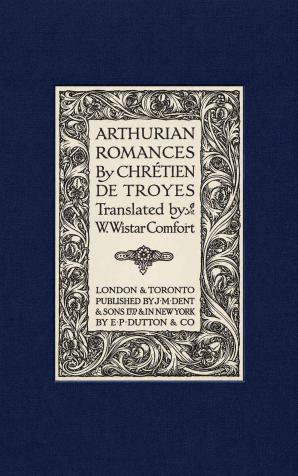
The Queen called for some ribbons four ells long, made of silken thread and gold.
textile
сделанный из шёлковой нити и золота
Сделанный из шёлковой нити и золота.
Four Arthurian Romances
"Four Arthurian Romances" by Chrétien de Troyes is a collection of medieval narratives written in the latter part of the 12th century. This work encompasses the stories of four heroes: Erec, Cligés, Yvain, and Lancelot, each exploring the themes of chivalry, romance, and adventure intertwined with the sophisticated ideals of courtly love. The romances reflect the rich tapestry of Arthurian legend, showcasing knights undertaking noble quests and engaging in battles for honor and love. The opening of "Four Arthurian Romances" introduces the tale of Erec and Enide, beginning with King Arthur's court and the announcement of a hunt for the elusive White Stag, which involves a significant and potentially troublesome tradition. Erec, a prominent knight, is drawn into conflict after a dwarf and a knight insult and strike a damsel at the court. Following this assault, Erec seeks to avenge the honor of the lady, embarking on a quest that leads him through various perils and encounters. His journey sets the stage for themes of valor and love as Erec strives to prove himself worthy, ultimately leading to his romantic involvement with Enide and the promise of her marriage. The romance illustrates not just action and adventure, but also explores the emotional and social dynamics of courtly life in a quintessential chivalric manner.
There was a man dressed as a windmill with enormous sails, a man dressed as an elephant, a man dressed as a balloon; the two last, together, seemed to keep the thread of their farcical adventures.
literature
сохранять нить
Сохранять или продолжать сюжетную линию последовательности событий.
The Man Who Was Thursday: A Nightmare
"The Man Who Was Thursday: A Nightmare" by G. K. Chesterton is a philosophical novel with elements of adventure and satire, written in the late 19th century. The story revolves around the enigmatic character Gabriel Syme, a police detective who infiltrates a group of anarchists in London to uncover their plans and identities. As the narrative unfolds, it explores complex themes of order, chaos, and the nature of evil, often through witty dialogue and absurd situations that challenge conventional thinking. At the start of the novel, readers are introduced to the suburb of Saffron Park, with its colorful and eccentric inhabitants, primarily poets and artists. One evening, during a striking sunset, the anarchistic poet Lucian Gregory meets Gabriel Syme, who surprises him with bold arguments in favor of law and order, challenging Gregory's views. Their conversation escalates into a duel of ideologies when Gregory reveals his deep commitment to anarchism, which leads to a confrontation between the two. In a twist of fate, Syme's true identity as a detective is disclosed, and as he joins the anarchists disguised as one of them, the stage is set for a profound exploration of the philosophical conflict between chaos and structure in society.

And yet, in some indescribable way, she kept recurring like a motive in music through all his mad adventures afterwards, and the glory of her strange hair ran like a red thread through those dark and ill-drawn tapestries of the night.
general
проходила красной нитью через
Образовывала повторяющийся связующий мотив на протяжении чего-либо.
The Man Who Was Thursday: A Nightmare
"The Man Who Was Thursday: A Nightmare" by G. K. Chesterton is a philosophical novel with elements of adventure and satire, written in the late 19th century. The story revolves around the enigmatic character Gabriel Syme, a police detective who infiltrates a group of anarchists in London to uncover their plans and identities. As the narrative unfolds, it explores complex themes of order, chaos, and the nature of evil, often through witty dialogue and absurd situations that challenge conventional thinking. At the start of the novel, readers are introduced to the suburb of Saffron Park, with its colorful and eccentric inhabitants, primarily poets and artists. One evening, during a striking sunset, the anarchistic poet Lucian Gregory meets Gabriel Syme, who surprises him with bold arguments in favor of law and order, challenging Gregory's views. Their conversation escalates into a duel of ideologies when Gregory reveals his deep commitment to anarchism, which leads to a confrontation between the two. In a twist of fate, Syme's true identity as a detective is disclosed, and as he joins the anarchists disguised as one of them, the stage is set for a profound exploration of the philosophical conflict between chaos and structure in society.
who holds all the threads in his hands
mystery
нити
Threads употреблено в переносном смысле и обозначает связи и детали, которыми управляет тайный организатор.
The Extraordinary Adventures of Arsène Lupin, Gentleman-Burglar
"The Extraordinary Adventures of Arsène Lupin, Gentleman-Burglar" by Maurice Leblanc is a collection of stories published in 1907. This debut collection introduces the charming and cunning Arsène Lupin, a master thief who outsmarts police and high society alike. Through nine tales of daring heists, clever disguises, and audacious escapes, Lupin proves himself an unmatched criminal genius. From shipboard robberies to prison breaks, he taunts authorities—including a famous English detective—while stealing priceless treasures with impeccable style and wit.
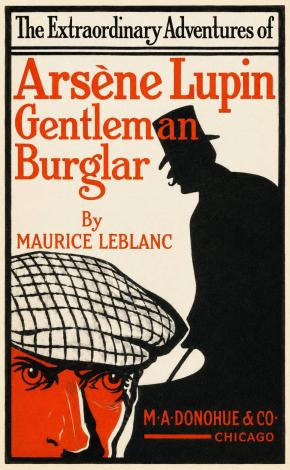
The next most important threads were those that were added by the Celtic chroniclers
literature
нити
Это метафора: различные культурные влияния описываются как нити, вплетённые в историю Артура.
King Arthur and the Knights of the Round Table
"King Arthur and the Knights of the Round Table" by Sir Thomas Malory is a prose compilation written around 1470. This Middle English work weaves together legendary tales of King Arthur, Guinevere, Lancelot, Merlin, and the Knights of the Round Table. Malory assembled and reworked material from various French and English sources to create a complete narrative spanning Arthur's conception to his death. The compilation includes the quest for the Holy Grail and the legend of Tristan and Iseult, creating one of the most influential works of Arthurian literature.

They were bound together by the thread that led from the court of King Arthur.
literature
нить
Thread употреблено метафорически: оно обозначает связь, возвращающую все отдельные истории к двору Артура.
King Arthur and the Knights of the Round Table
"King Arthur and the Knights of the Round Table" by Sir Thomas Malory is a prose compilation written around 1470. This Middle English work weaves together legendary tales of King Arthur, Guinevere, Lancelot, Merlin, and the Knights of the Round Table. Malory assembled and reworked material from various French and English sources to create a complete narrative spanning Arthur's conception to his death. The compilation includes the quest for the Holy Grail and the legend of Tristan and Iseult, creating one of the most influential works of Arthurian literature.
The girdle was nobly wrought with golden thread.
textile
искусно сделанный с золотой нитью
Искусно изготовленный или вышитый золотой нитью.
King Arthur and the Knights of the Round Table
"King Arthur and the Knights of the Round Table" by Sir Thomas Malory is a prose compilation written around 1470. This Middle English work weaves together legendary tales of King Arthur, Guinevere, Lancelot, Merlin, and the Knights of the Round Table. Malory assembled and reworked material from various French and English sources to create a complete narrative spanning Arthur's conception to his death. The compilation includes the quest for the Holy Grail and the legend of Tristan and Iseult, creating one of the most influential works of Arthurian literature.
Practically all of them, however, were bound together by the thread that led from the court of the great King Arthur at Camelot.
literature
объединены одной нитью
Связаны общей основой, которая метафорически представлена как нить.
King Arthur and the Knights of the Round Table
"King Arthur and the Knights of the Round Table" by Sir Thomas Malory is a prose compilation written around 1470. This Middle English work weaves together legendary tales of King Arthur, Guinevere, Lancelot, Merlin, and the Knights of the Round Table. Malory assembled and reworked material from various French and English sources to create a complete narrative spanning Arthur's conception to his death. The compilation includes the quest for the Holy Grail and the legend of Tristan and Iseult, creating one of the most influential works of Arthurian literature.
We were out in the square again now, threading our way among people I hardly saw for being so wrapt up in her.
general
пробираться среди людей
Осторожно пробираться сквозь группу людей или людное место.
The Yeoman Adventurer
"The Yeoman Adventurer" by George W. Gough is a historical novel likely written in the early 20th century. The story unfolds through the experiences of Oliver Wheatman, a yeoman, as he navigates life in a tumultuous period marked by the Jacobite uprisings, personal ambition, and romantic entanglements. The novel delves into themes of bravery, identity, and the quest for adventure against a backdrop of deep social and political upheaval. The opening of the book introduces Oliver Wheatman as he reflects on his life in a rural setting, immediately exposing his longing for adventure and the complexities of his relationships, especially with a character named Kate and her brother Jack Dobson, a soldier. As he witnesses soldiers marching and grapples with feelings of inadequacy, his fate intertwines with that of a captivating woman, Mistress Margaret Waynflete, who is entangled in the Jacobite cause. The chapter sets up a series of events where violence and danger emerge, ultimately leading Oliver to rescue Mistress Waynflete, and shapes the thrilling and romantic quest that defines the narrative.

I was threading my way through them to the far side of the square.
general
пробираться сквозь что-либо
Осторожно пробираться через тесное или загромождённое место.
The Yeoman Adventurer
"The Yeoman Adventurer" by George W. Gough is a historical novel likely written in the early 20th century. The story unfolds through the experiences of Oliver Wheatman, a yeoman, as he navigates life in a tumultuous period marked by the Jacobite uprisings, personal ambition, and romantic entanglements. The novel delves into themes of bravery, identity, and the quest for adventure against a backdrop of deep social and political upheaval. The opening of the book introduces Oliver Wheatman as he reflects on his life in a rural setting, immediately exposing his longing for adventure and the complexities of his relationships, especially with a character named Kate and her brother Jack Dobson, a soldier. As he witnesses soldiers marching and grapples with feelings of inadequacy, his fate intertwines with that of a captivating woman, Mistress Margaret Waynflete, who is entangled in the Jacobite cause. The chapter sets up a series of events where violence and danger emerge, ultimately leading Oliver to rescue Mistress Waynflete, and shapes the thrilling and romantic quest that defines the narrative.
From it she took a patch of cloth and a hank of silk thread.
textile
моток шёлковой нити
Связка или моток шёлковой нити.
The Yeoman Adventurer
"The Yeoman Adventurer" by George W. Gough is a historical novel likely written in the early 20th century. The story unfolds through the experiences of Oliver Wheatman, a yeoman, as he navigates life in a tumultuous period marked by the Jacobite uprisings, personal ambition, and romantic entanglements. The novel delves into themes of bravery, identity, and the quest for adventure against a backdrop of deep social and political upheaval. The opening of the book introduces Oliver Wheatman as he reflects on his life in a rural setting, immediately exposing his longing for adventure and the complexities of his relationships, especially with a character named Kate and her brother Jack Dobson, a soldier. As he witnesses soldiers marching and grapples with feelings of inadequacy, his fate intertwines with that of a captivating woman, Mistress Margaret Waynflete, who is entangled in the Jacobite cause. The chapter sets up a series of events where violence and danger emerge, ultimately leading Oliver to rescue Mistress Waynflete, and shapes the thrilling and romantic quest that defines the narrative.