


Read academic content and turn it into language practice
Work with research papers and academic language: understand the text, ask questions, and use relevant phrasing in your own writing.
Start without signing up by opening a material from the public library.
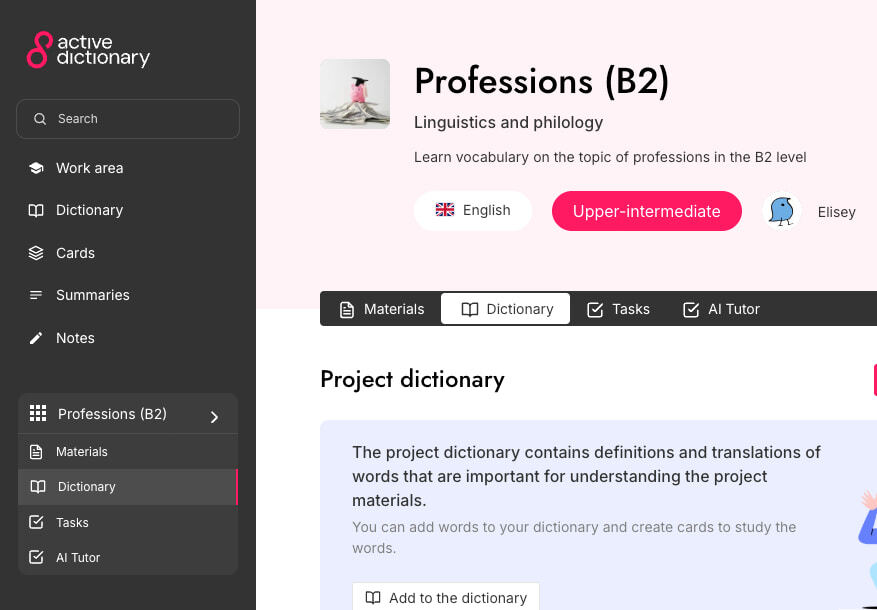
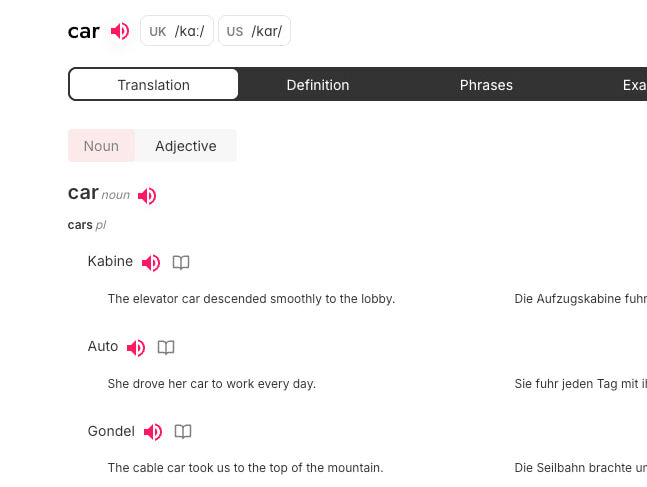
The user need
A research paper requires more than a literal translation
You need to understand terminology, argumentation, and recurring academic phrasing, then learn to use it in your own writing.
How to begin
Three clear steps from source material to active practice.
- 1
Open a paper or PDF
Add a file to a project or find a material through the available Semantic Scholar workflow.
- 2
Explore the terminology
Investigate words and phrases in context, ask questions, and check your understanding of the content.
- 3
Move into academic writing
Select useful phrases and complete a writing task based on what you have read.
Available now
Capabilities in the current product
Only features supported by the Active Dictionary product and specification.
- Interactive work with PDF files and texts.
- Academic material discovery through Semantic Scholar.
- An AI tutor and comprehension questions about the material.
- A phrase radar and writing-practice tools.
Frequently asked questions
Can I work with a scanned PDF?
OCR processing is available for PDF. In the current version, automatic processing is designed for files of up to 50 pages.
What does the Semantic Scholar integration provide?
It supports a dedicated academic material discovery workflow. Access to a particular publication depends on its source.
Does the product help write an academic text?
The writing trainer helps select phrases and provides language hints. The author remains responsible for the substance and academic quality of the final text.