


Enter the word for search
Library
2 drawer fronts, 3/4 by 5-3/4 by 25 in., S-4-S. +5
woodworking
façade de tiroir
panneau avant du tiroir
Ici, une façade de tiroir est le panneau visible à l’avant du tiroir.
Mission Furniture: How to Make It, Part 3
"Mission Furniture: How to Make It, Part 3" by H. H. Windsor is a practical handbook written in the early 20th century, specifically in 1912. This instructional guide falls under the genre of DIY (Do It Yourself) manuals, focusing on the craftsmanship of mission-style furniture. It is part of a series published under the Popular Mechanics brand, indicating an emphasis on accessible, easily understood information for woodworking enthusiasts of varying skill levels. The opening portion of the book introduces the reader to various projects involved in building mission-style furniture. It outlines the materials and dimensions required for constructing different pieces, including a piano bench, library table, princess dresser, sewing box, and fern stand, among others. Each piece includes detailed instructions on measuring, cutting, and assembling, showcasing Windsor's intention to empower readers to create their own furniture at home. This section serves as an introduction to the comprehensive guidance on crafting that follows in the subsequent chapters, appealing to both novice and experienced woodworkers.

The two front posts are alike, as are the back ones. +5
carpentry
montants avant
Les supports verticaux situés à l’avant de l’armoire.
Mission Furniture: How to Make It, Part 3
"Mission Furniture: How to Make It, Part 3" by H. H. Windsor is a practical handbook written in the early 20th century, specifically in 1912. This instructional guide falls under the genre of DIY (Do It Yourself) manuals, focusing on the craftsmanship of mission-style furniture. It is part of a series published under the Popular Mechanics brand, indicating an emphasis on accessible, easily understood information for woodworking enthusiasts of varying skill levels. The opening portion of the book introduces the reader to various projects involved in building mission-style furniture. It outlines the materials and dimensions required for constructing different pieces, including a piano bench, library table, princess dresser, sewing box, and fern stand, among others. Each piece includes detailed instructions on measuring, cutting, and assembling, showcasing Windsor's intention to empower readers to create their own furniture at home. This section serves as an introduction to the comprehensive guidance on crafting that follows in the subsequent chapters, appealing to both novice and experienced woodworkers.
He stopped in front of an old-clothes shop. +4
general
devant
Dans une position directement devant quelque chose ou quelqu’un.
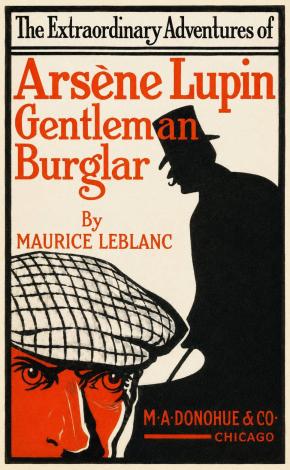
The Extraordinary Adventures of Arsène Lupin, Gentleman-Burglar
"The Extraordinary Adventures of Arsène Lupin, Gentleman-Burglar" by Maurice Leblanc is a collection of stories published in 1907. This debut collection introduces the charming and cunning Arsène Lupin, a master thief who outsmarts police and high society alike. Through nine tales of daring heists, clever disguises, and audacious escapes, Lupin proves himself an unmatched criminal genius. From shipboard robberies to prison breaks, he taunts authorities—including a famous English detective—while stealing priceless treasures with impeccable style and wit.
Not more than a mile and a half beyond it on the Newcastle road there's a little wayside ale-house called the 'Ring of Bells,' at the foot of a steep hill, with a large pool ringed with pines, known as Cop Mere, in front of it. +3
general
en présence de
En présence de quelqu’un, tandis que le narrateur porte un toast en présence de Jane.
The Yeoman Adventurer
"The Yeoman Adventurer" by George W. Gough is a historical novel likely written in the early 20th century. The story unfolds through the experiences of Oliver Wheatman, a yeoman, as he navigates life in a tumultuous period marked by the Jacobite uprisings, personal ambition, and romantic entanglements. The novel delves into themes of bravery, identity, and the quest for adventure against a backdrop of deep social and political upheaval. The opening of the book introduces Oliver Wheatman as he reflects on his life in a rural setting, immediately exposing his longing for adventure and the complexities of his relationships, especially with a character named Kate and her brother Jack Dobson, a soldier. As he witnesses soldiers marching and grapples with feelings of inadequacy, his fate intertwines with that of a captivating woman, Mistress Margaret Waynflete, who is entangled in the Jacobite cause. The chapter sets up a series of events where violence and danger emerge, ultimately leading Oliver to rescue Mistress Waynflete, and shapes the thrilling and romantic quest that defines the narrative.

Redgrave turned the wheel in front of the 100-degree disc a little to the left. +3
general
devant
Dans une position directement devant quelque chose.
A Honeymoon in Space
A Honeymoon in Space is a 1901 novel by George Griffith. It was originally serialized in abridged form in Pearson's Magazine in 1900 under the title Stories of Other Worlds. The scientific romance story depicts a tour of the Solar System, a type of story that was in vogue at the time.

1 drawer front, 3/4 by 7 by 36 in., S-4-S. +2
woodworking
façade de tiroir
Le panneau avant d’un tiroir.
Mission Furniture: How to Make It, Part 3
"Mission Furniture: How to Make It, Part 3" by H. H. Windsor is a practical handbook written in the early 20th century, specifically in 1912. This instructional guide falls under the genre of DIY (Do It Yourself) manuals, focusing on the craftsmanship of mission-style furniture. It is part of a series published under the Popular Mechanics brand, indicating an emphasis on accessible, easily understood information for woodworking enthusiasts of varying skill levels. The opening portion of the book introduces the reader to various projects involved in building mission-style furniture. It outlines the materials and dimensions required for constructing different pieces, including a piano bench, library table, princess dresser, sewing box, and fern stand, among others. Each piece includes detailed instructions on measuring, cutting, and assembling, showcasing Windsor's intention to empower readers to create their own furniture at home. This section serves as an introduction to the comprehensive guidance on crafting that follows in the subsequent chapters, appealing to both novice and experienced woodworkers.
A photo of a man and a woman sitting on their respective horseback in front of a building's entrance. +1
theatre
devant
en face de
Indique que quelque chose est situé devant une autre chose ou lui fait face.
European Theatre Migrants in the Age of Empire
This collection examines the journeys and working lives of European theatre practitioners during the age of empire. Historical case studies explore migration, performance, cultural exchange and the political conditions shaping theatrical careers across national borders.

2 front posts, 1-3/4 by 1-3/4 by 25 in., S-4-S. +1
woodworking
avant
Le terme « avant » est utilisé pour désigner les montants situés à l’avant de la chaise.
Mission Furniture: How to Make It, Part 3
"Mission Furniture: How to Make It, Part 3" by H. H. Windsor is a practical handbook written in the early 20th century, specifically in 1912. This instructional guide falls under the genre of DIY (Do It Yourself) manuals, focusing on the craftsmanship of mission-style furniture. It is part of a series published under the Popular Mechanics brand, indicating an emphasis on accessible, easily understood information for woodworking enthusiasts of varying skill levels. The opening portion of the book introduces the reader to various projects involved in building mission-style furniture. It outlines the materials and dimensions required for constructing different pieces, including a piano bench, library table, princess dresser, sewing box, and fern stand, among others. Each piece includes detailed instructions on measuring, cutting, and assembling, showcasing Windsor's intention to empower readers to create their own furniture at home. This section serves as an introduction to the comprehensive guidance on crafting that follows in the subsequent chapters, appealing to both novice and experienced woodworkers.
2 front legs, 2 by 2 by 26-3/4 in. +1
woodworking
pieds avant
Les deux pieds situés à l’avant d’une chaise ou d’un autre meuble.
Mission Furniture: How to Make It, Part 3
"Mission Furniture: How to Make It, Part 3" by H. H. Windsor is a practical handbook written in the early 20th century, specifically in 1912. This instructional guide falls under the genre of DIY (Do It Yourself) manuals, focusing on the craftsmanship of mission-style furniture. It is part of a series published under the Popular Mechanics brand, indicating an emphasis on accessible, easily understood information for woodworking enthusiasts of varying skill levels. The opening portion of the book introduces the reader to various projects involved in building mission-style furniture. It outlines the materials and dimensions required for constructing different pieces, including a piano bench, library table, princess dresser, sewing box, and fern stand, among others. Each piece includes detailed instructions on measuring, cutting, and assembling, showcasing Windsor's intention to empower readers to create their own furniture at home. This section serves as an introduction to the comprehensive guidance on crafting that follows in the subsequent chapters, appealing to both novice and experienced woodworkers.
When I last saw it, the pinton was placed on the lawn in front of William Murdock's villa at Handsworth. +1
general
devant
en face de
S’emploie pour décrire quelque chose situé devant ou face à autre chose.
Men of Invention and Industry
"Men of Invention and Industry" by Samuel Smiles is a historical account likely written in the late 19th century. The book examines the lives and contributions of various inventors and industrialists, highlighting their impact on society, particularly within British industry, with an emphasis on significant advancements such as shipbuilding and steam power. The opening of the book sets the stage with a discussion of the early history of English shipbuilding, beginning with the figure of Phineas Pett. It explores the humble beginnings of the British navy and the advancements made under historical figures like Henry VIII. Various early challenges in shipbuilding are elucidated, alongside the importance of foreign expertise in developing England’s maritime capabilities. The narrative illustrates a shift from a heavy reliance on importing goods and expertise to a burgeoning English independence in shipbuilding and trade, paving the way for a stronger national identity tied to maritime innovation.

Keep its finished edge at the front and its grooved face upwards, with the groove beside the rear edge. +1
furniture
face avant
Fournit une orientation fixe pour positionner le panneau lors de l’assemblage.
Which way does the groove face?
A complete original case with embedded dialogue and evidence limits.
The front-loading washing machine came with the flat. +1
appliance
lave-linge à chargement frontal
Un lave-linge dont la porte et l’ouverture du tambour se trouvent à l’avant.
The Washer Stops at Six Minutes
A complete fictional case file from the first appliance report through clarification, incident recording, appointment negotiation, and final access confirmation.