Enter the word for search
assert
UK
/əˈsɜːt/
US
/əˈsɜrt/
Library
They all assert it is because I have so ensnared and caught you. +12
rhetoric
affirmer
«Affirmer» signifie énoncer quelque chose avec fermeté et assurance comme un fait.
Four Arthurian Romances
"Four Arthurian Romances" by Chrétien de Troyes is a collection of medieval narratives written in the latter part of the 12th century. This work encompasses the stories of four heroes: Erec, Cligés, Yvain, and Lancelot, each exploring the themes of chivalry, romance, and adventure intertwined with the sophisticated ideals of courtly love. The romances reflect the rich tapestry of Arthurian legend, showcasing knights undertaking noble quests and engaging in battles for honor and love. The opening of "Four Arthurian Romances" introduces the tale of Erec and Enide, beginning with King Arthur's court and the announcement of a hunt for the elusive White Stag, which involves a significant and potentially troublesome tradition. Erec, a prominent knight, is drawn into conflict after a dwarf and a knight insult and strike a damsel at the court. Following this assault, Erec seeks to avenge the honor of the lady, embarking on a quest that leads him through various perils and encounters. His journey sets the stage for themes of valor and love as Erec strives to prove himself worthy, ultimately leading to his romantic involvement with Enide and the promise of her marriage. The romance illustrates not just action and adventure, but also explores the emotional and social dynamics of courtly life in a quintessential chivalric manner.

It did not assert that disliking a decision made every opinion in the file inaccurate, or that a data correction would necessarily result in a successful service application.
law
affirmer
soutenir
La phrase indique qu’Imran n’a pas affirmé que le fait de ne pas aimer une décision rendait chaque opinion inexacte.
The Decision Used an Old Address
A complete original case with dialogue, evidence and a bounded outcome.
She did not assert that it had occurred.
research
affirmer
prétendre
Miri a évité d’affirmer que le changement non documenté avait eu lieu.
More Visitors, More Litter: What Caused What?
A complete original case with embedded dialogue and evidence limits.
She did not assert that it had occurred.
research
n’a pas affirmé que cela s’était produit
A soigneusement évité d’affirmer que l’événement avait réellement eu lieu.
More Visitors, More Litter: What Caused What?
A complete original case with embedded dialogue and evidence limits.
No real transport timetable, operator cancellation policy or safe weather threshold is asserted.
general
affirmer
Dans la construction passive, cela signifie que le texte n’affirme l’existence d’aucun horaire réel, d’aucune politique réelle ni d’aucune limite de sécurité réelle.
Two routes, three months and a changed constraint
Accessible HTML alternative of the independent PDF case file; same document, not an additional reading.
This is the status in this notice; it is not asserted to remain the level on 11 September or today
communication
affirmer
déclarer
L’avis ne prétend pas que le niveau d’alerte indiqué reste en vigueur par la suite.
Kīlauea: scientific status and visitor access
Accessible HTML alternative of the independent PDF case file; same document, not an additional reading.
They strengthen her desire by their consent; yet she hesitates to assert her wishes until, as if against her will, she finally speaks to the same intent as she would have done, indeed, if every one had opposed her wish:
marriage
faire valoir ses souhaits
Exprimer ou faire valoir ce qu’elle veut.
Four Arthurian Romances
"Four Arthurian Romances" by Chrétien de Troyes is a collection of medieval narratives written in the latter part of the 12th century. This work encompasses the stories of four heroes: Erec, Cligés, Yvain, and Lancelot, each exploring the themes of chivalry, romance, and adventure intertwined with the sophisticated ideals of courtly love. The romances reflect the rich tapestry of Arthurian legend, showcasing knights undertaking noble quests and engaging in battles for honor and love. The opening of "Four Arthurian Romances" introduces the tale of Erec and Enide, beginning with King Arthur's court and the announcement of a hunt for the elusive White Stag, which involves a significant and potentially troublesome tradition. Erec, a prominent knight, is drawn into conflict after a dwarf and a knight insult and strike a damsel at the court. Following this assault, Erec seeks to avenge the honor of the lady, embarking on a quest that leads him through various perils and encounters. His journey sets the stage for themes of valor and love as Erec strives to prove himself worthy, ultimately leading to his romantic involvement with Enide and the promise of her marriage. The romance illustrates not just action and adventure, but also explores the emotional and social dynamics of courtly life in a quintessential chivalric manner.
The logic of the position will more and more loudly assert itself.
general
s’imposer
Devenir évident ou influent de façon marquée.
The Souls of Black Folk
"The Souls of Black Folk" by W. E. B. Du Bois is a collection of essays published in 1903. This groundbreaking work explores the African-American experience through personal observations and social analysis. Du Bois introduces influential concepts like "double consciousness"—the experience of viewing oneself through both one's own eyes and those of a prejudiced society—and "the veil" that separates black and white Americans. Through essays on education, freedom, and justice, he examines the color line dividing races and argues for voting rights, quality education, and equal treatment.

to assert her better self
ethics
faire valoir son meilleur côté
Montrer le côté moralement meilleur de son caractère.
The Souls of Black Folk
"The Souls of Black Folk" by W. E. B. Du Bois is a collection of essays published in 1903. This groundbreaking work explores the African-American experience through personal observations and social analysis. Du Bois introduces influential concepts like "double consciousness"—the experience of viewing oneself through both one's own eyes and those of a prejudiced society—and "the veil" that separates black and white Americans. Through essays on education, freedom, and justice, he examines the color line dividing races and argues for voting rights, quality education, and equal treatment.
The young man called Bull, with an innocent courtesy characteristic of him, insisted on going last until they reached the street; but there his own robust rapidity asserted itself unconsciously, and he walked quickly on ahead towards a railway inquiry office, talking to the others over his shoulder.
general
se faire sentir
s’affirmer
Devenir clairement perceptible ou influent, souvent sans effort délibéré.
The Man Who Was Thursday: A Nightmare
"The Man Who Was Thursday: A Nightmare" by G. K. Chesterton is a philosophical novel with elements of adventure and satire, written in the late 19th century. The story revolves around the enigmatic character Gabriel Syme, a police detective who infiltrates a group of anarchists in London to uncover their plans and identities. As the narrative unfolds, it explores complex themes of order, chaos, and the nature of evil, often through witty dialogue and absurd situations that challenge conventional thinking. At the start of the novel, readers are introduced to the suburb of Saffron Park, with its colorful and eccentric inhabitants, primarily poets and artists. One evening, during a striking sunset, the anarchistic poet Lucian Gregory meets Gabriel Syme, who surprises him with bold arguments in favor of law and order, challenging Gregory's views. Their conversation escalates into a duel of ideologies when Gregory reveals his deep commitment to anarchism, which leads to a confrontation between the two. In a twist of fate, Syme's true identity as a detective is disclosed, and as he joins the anarchists disguised as one of them, the stage is set for a profound exploration of the philosophical conflict between chaos and structure in society.

The man’s colourless face and manner seemed to assert that the whole following had been an accident.
general
sembler affirmer que
Donnait l’impression de communiquer ou d’insister sur le fait que quelque chose était vrai.
The Man Who Was Thursday: A Nightmare
"The Man Who Was Thursday: A Nightmare" by G. K. Chesterton is a philosophical novel with elements of adventure and satire, written in the late 19th century. The story revolves around the enigmatic character Gabriel Syme, a police detective who infiltrates a group of anarchists in London to uncover their plans and identities. As the narrative unfolds, it explores complex themes of order, chaos, and the nature of evil, often through witty dialogue and absurd situations that challenge conventional thinking. At the start of the novel, readers are introduced to the suburb of Saffron Park, with its colorful and eccentric inhabitants, primarily poets and artists. One evening, during a striking sunset, the anarchistic poet Lucian Gregory meets Gabriel Syme, who surprises him with bold arguments in favor of law and order, challenging Gregory's views. Their conversation escalates into a duel of ideologies when Gregory reveals his deep commitment to anarchism, which leads to a confrontation between the two. In a twist of fate, Syme's true identity as a detective is disclosed, and as he joins the anarchists disguised as one of them, the stage is set for a profound exploration of the philosophical conflict between chaos and structure in society.
We are able to assert, positively, that the plans are in existence
investigation
affirmer
Ce verbe formel introduit une conclusion assurée fondée sur l’enquête.
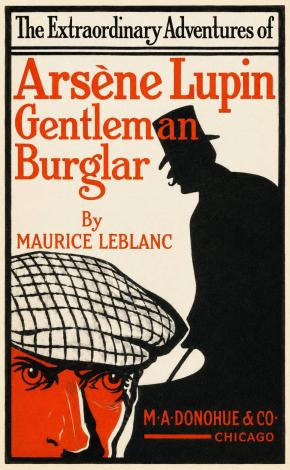
The Extraordinary Adventures of Arsène Lupin, Gentleman-Burglar
"The Extraordinary Adventures of Arsène Lupin, Gentleman-Burglar" by Maurice Leblanc is a collection of stories published in 1907. This debut collection introduces the charming and cunning Arsène Lupin, a master thief who outsmarts police and high society alike. Through nine tales of daring heists, clever disguises, and audacious escapes, Lupin proves himself an unmatched criminal genius. From shipboard robberies to prison breaks, he taunts authorities—including a famous English detective—while stealing priceless treasures with impeccable style and wit.