Enter the word for search
mistrusting
UK
/mɪsˈtrʌstɪŋ/
US
/mɪsˈtrʌstɪŋ/
Library
Member States have a mistrust in the EU +2
politics
méfiance
Décrit le manque de confiance des États membres dans la capacité de l’UE à protéger les droits.
National Constitutions in European and Global Governance: Democracy, Rights, the Rule of Law: National Reports
This two-volume book, published open access, brings together leading scholars of constitutional law from twenty-nine European countries to revisit the role of national constitutions at a time when decision-making has increasingly shifted to the European and transnational level. It offers important insights into three areas. First, it explores how constitutions reflect the transfer of powers from domestic to European and global institutions. Secondly, it revisits substantive constitutional values, such as the protection of constitutional rights, the rule of law, democratic participation and constitutional review, along with constitutional court judgments that tackle the protection of these rights and values in the transnational context, e.g. with regard to the Data Retention Directive, the European Arrest Warrant, the ESM Treaty, and EU and IMF austerity measures. The responsiveness of the ECJ regarding the above rights and values, along with the standard of protection, is also assessed.

Initially, the Constitution relied on the elected Parliament and expressed its mistrust of the executive.
law
méfiance à l’égard de l’exécutif
Manque de confiance envers la branche du gouvernement chargée de mettre en œuvre les lois et les politiques.
National Constitutions in European and Global Governance: Democracy, Rights, the Rule of Law: National Reports
This two-volume book, published open access, brings together leading scholars of constitutional law from twenty-nine European countries to revisit the role of national constitutions at a time when decision-making has increasingly shifted to the European and transnational level. It offers important insights into three areas. First, it explores how constitutions reflect the transfer of powers from domestic to European and global institutions. Secondly, it revisits substantive constitutional values, such as the protection of constitutional rights, the rule of law, democratic participation and constitutional review, along with constitutional court judgments that tackle the protection of these rights and values in the transnational context, e.g. with regard to the Data Retention Directive, the European Arrest Warrant, the ESM Treaty, and EU and IMF austerity measures. The responsiveness of the ECJ regarding the above rights and values, along with the standard of protection, is also assessed.
possibly causing confusion, frustration, or mistrust
psychology
méfiance
Désigne le fait que les utilisateurs se méfient d’un système d’IA, éventuellement en raison de ses erreurs ou de sa nature défectueuse.
User Experience + Artificial Intelligence: Assessing the Qualities of AI-infused Systems
This study develops a method for evaluating the user experience of systems that incorporate artificial intelligence. It examines existing approaches, validates the AIXE evaluation scale and applies it to domestic smart speakers.

However, some designers expressed mistrust towards the ‘second-hand data’ (i.e. an interpretation of the facilitator) and authenticity of the handover tools.
research
méfiance
Certains concepteurs doutaient de la fiabilité des données et des outils utilisés dans le processus de transfert.
Dementia Lab 2025: Ethics + Aesthetics in Design
This collection presents research on designing with and for people living with dementia. Its studies examine participatory methods, care environments, technology and everyday experiences, with attention to ethical questions and aesthetic engagement.

I mistrusted the armed knight, who, being an ugly fellow and violent, would take it as no jest, and would soon kill me in his pride.
chivalry
se méfier de quelqu’un
Le locuteur se méfie du chevalier et ne fait pas confiance à ses intentions.
Four Arthurian Romances
"Four Arthurian Romances" by Chrétien de Troyes is a collection of medieval narratives written in the latter part of the 12th century. This work encompasses the stories of four heroes: Erec, Cligés, Yvain, and Lancelot, each exploring the themes of chivalry, romance, and adventure intertwined with the sophisticated ideals of courtly love. The romances reflect the rich tapestry of Arthurian legend, showcasing knights undertaking noble quests and engaging in battles for honor and love. The opening of "Four Arthurian Romances" introduces the tale of Erec and Enide, beginning with King Arthur's court and the announcement of a hunt for the elusive White Stag, which involves a significant and potentially troublesome tradition. Erec, a prominent knight, is drawn into conflict after a dwarf and a knight insult and strike a damsel at the court. Following this assault, Erec seeks to avenge the honor of the lady, embarking on a quest that leads him through various perils and encounters. His journey sets the stage for themes of valor and love as Erec strives to prove himself worthy, ultimately leading to his romantic involvement with Enide and the promise of her marriage. The romance illustrates not just action and adventure, but also explores the emotional and social dynamics of courtly life in a quintessential chivalric manner.

The engaging manner of the judge was calculated to disarm the mistrust and awaken the understanding of the accused man.
psychology
méfiance
Le juge veut réduire la suspicion et le manque de confiance de l'homme accusé.
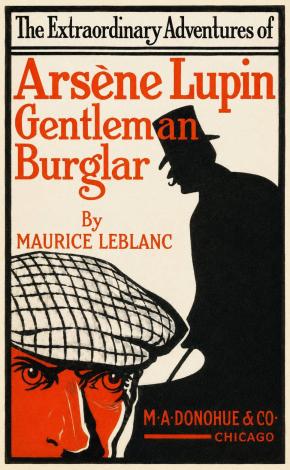
The Extraordinary Adventures of Arsène Lupin, Gentleman-Burglar
"The Extraordinary Adventures of Arsène Lupin, Gentleman-Burglar" by Maurice Leblanc is a collection of stories published in 1907. This debut collection introduces the charming and cunning Arsène Lupin, a master thief who outsmarts police and high society alike. Through nine tales of daring heists, clever disguises, and audacious escapes, Lupin proves himself an unmatched criminal genius. From shipboard robberies to prison breaks, he taunts authorities—including a famous English detective—while stealing priceless treasures with impeccable style and wit.
They went on board without the slightest sign of mistrust and with only an expression of mild wonder on their beautiful and strangely childlike faces.
interaction
sans le moindre signe de méfiance
Décrit une action accomplie sans aucun signe visible de méfiance ou de suspicion.
A Honeymoon in Space
A Honeymoon in Space is a 1901 novel by George Griffith. It was originally serialized in abridged form in Pearson's Magazine in 1900 under the title Stories of Other Worlds. The scientific romance story depicts a tour of the Solar System, a type of story that was in vogue at the time.