


Enter the word for search
clock
UK
/klɒk/
US
/klɑk/
Library
He proposed to make an eight-day clock, with wheels of this material. +1
horology
часы
Предложение говорит о часах, изготовленных мастером, в том числе о часах, приводящих в движение телескопы.
Men of Invention and Industry
"Men of Invention and Industry" by Samuel Smiles is a historical account likely written in the late 19th century. The book examines the lives and contributions of various inventors and industrialists, highlighting their impact on society, particularly within British industry, with an emphasis on significant advancements such as shipbuilding and steam power. The opening of the book sets the stage with a discussion of the early history of English shipbuilding, beginning with the figure of Phineas Pett. It explores the humble beginnings of the British navy and the advancements made under historical figures like Henry VIII. Various early challenges in shipbuilding are elucidated, alongside the importance of foreign expertise in developing England’s maritime capabilities. The narrative illustrates a shift from a heavy reliance on importing goods and expertise to a burgeoning English independence in shipbuilding and trade, paving the way for a stronger national identity tied to maritime innovation.

To-morrow, at three o’clock. +1
general
в три часа
В определённое время — в 3:00.
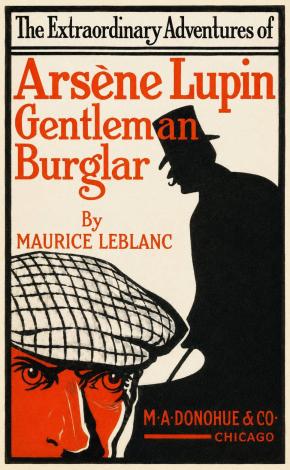
The Extraordinary Adventures of Arsène Lupin, Gentleman-Burglar
"The Extraordinary Adventures of Arsène Lupin, Gentleman-Burglar" by Maurice Leblanc is a collection of stories published in 1907. This debut collection introduces the charming and cunning Arsène Lupin, a master thief who outsmarts police and high society alike. Through nine tales of daring heists, clever disguises, and audacious escapes, Lupin proves himself an unmatched criminal genius. From shipboard robberies to prison breaks, he taunts authorities—including a famous English detective—while stealing priceless treasures with impeccable style and wit.
At three o’clock in the morning, there were still half a dozen carriages in front of one of those small houses which form only the side of the boulevard Berthier. +1
general
в три часа утра
Точный способ указать время ранним утром.
The Extraordinary Adventures of Arsène Lupin, Gentleman-Burglar
"The Extraordinary Adventures of Arsène Lupin, Gentleman-Burglar" by Maurice Leblanc is a collection of stories published in 1907. This debut collection introduces the charming and cunning Arsène Lupin, a master thief who outsmarts police and high society alike. Through nine tales of daring heists, clever disguises, and audacious escapes, Lupin proves himself an unmatched criminal genius. From shipboard robberies to prison breaks, he taunts authorities—including a famous English detective—while stealing priceless treasures with impeccable style and wit.
An exact day and an exact clock time are different. +1
time
часы
Часы показывают время, которое можно непосредственно прочитать.
Tell a Simple Symptom Timeline: Case File and Communication Lab
Put four fictional observation cards in order and tell a simple timeline using exact, approximate and unknown information.
the only hope would be ‘to turn the clock back and begin to withdraw from regional and international structures of cooperation’.
politics
вернуть время вспять
Обратить развитие вспять и вернуться к прежнему состоянию или порядку.
National Constitutions in European and Global Governance: Democracy, Rights, the Rule of Law: National Reports
This two-volume book, published open access, brings together leading scholars of constitutional law from twenty-nine European countries to revisit the role of national constitutions at a time when decision-making has increasingly shifted to the European and transnational level. It offers important insights into three areas. First, it explores how constitutions reflect the transfer of powers from domestic to European and global institutions. Secondly, it revisits substantive constitutional values, such as the protection of constitutional rights, the rule of law, democratic participation and constitutional review, along with constitutional court judgments that tackle the protection of these rights and values in the transnational context, e.g. with regard to the Data Retention Directive, the European Arrest Warrant, the ESM Treaty, and EU and IMF austerity measures. The responsiveness of the ECJ regarding the above rights and values, along with the standard of protection, is also assessed.

Teachers’recesses and ‘off-the-clock’ work.
education
работа вне рабочего времени
Работа, выполняемая за пределами официально установленного или оплачиваемого рабочего времени.
The Ultimate Guide to Teacher Well-Being
This practical guide explains how education policy, school environments and individual habits can support teacher well-being. It presents research-based measures, implementation steps and examples from schools around the world, with dashboards for assessing the evidence and likely impact of each approach.

To wind like a clock spring.
physics
наматываться, как часовая пружина
Наматываться витками, подобно часовой пружине.
Electricity for Boys
"Electricity for Boys" by James Slough Zerbe is a practical guide written in the early 20th century. This work falls within the category of educational publications aimed at teaching young boys the fundamental concepts and applications of electricity through hands-on experiments. It emphasizes the importance of practical experience and experimentation over theoretical knowledge alone. The beginning of the text introduces the fascinating world of electricity, stressing the value of learning through practical application while experimenting with various tools and techniques. Zerbe explains that electricity can be understood better when boys engage directly with the material rather than through rote memorization of its principles. He lays out the book's fundamental approach to education, which involves experimenting, building, and discovering the principles that govern electrical phenomena. This foundational philosophy sets the stage for the more detailed chapters on specific electrical concepts and devices, reflecting a broader goal of fostering critical thinking and hands-on learning among young readers.

The magnet is made of a bar of steel (K, Fig. 39) 1½ inches long, ⅜ inch wide and 1/16 inch thick, a piece of a clock spring being very serviceable for this purpose.
engineering
часовая пружина
Пружина из часового механизма, которую здесь предлагают использовать для изготовления магнита.
Electricity for Boys
"Electricity for Boys" by James Slough Zerbe is a practical guide written in the early 20th century. This work falls within the category of educational publications aimed at teaching young boys the fundamental concepts and applications of electricity through hands-on experiments. It emphasizes the importance of practical experience and experimentation over theoretical knowledge alone. The beginning of the text introduces the fascinating world of electricity, stressing the value of learning through practical application while experimenting with various tools and techniques. Zerbe explains that electricity can be understood better when boys engage directly with the material rather than through rote memorization of its principles. He lays out the book's fundamental approach to education, which involves experimenting, building, and discovering the principles that govern electrical phenomena. This foundational philosophy sets the stage for the more detailed chapters on specific electrical concepts and devices, reflecting a broader goal of fostering critical thinking and hands-on learning among young readers.
If, on the other hand, the current in the wire (A) should be reversed or flow from left to right, the magnet (B) would swing counter-clock-wise, and assume the position shown in Fig. 36.
physics
отклоняться против часовой стрелки
Поворачиваться или отклоняться в направлении, противоположном движению часовых стрелок.
Electricity for Boys
"Electricity for Boys" by James Slough Zerbe is a practical guide written in the early 20th century. This work falls within the category of educational publications aimed at teaching young boys the fundamental concepts and applications of electricity through hands-on experiments. It emphasizes the importance of practical experience and experimentation over theoretical knowledge alone. The beginning of the text introduces the fascinating world of electricity, stressing the value of learning through practical application while experimenting with various tools and techniques. Zerbe explains that electricity can be understood better when boys engage directly with the material rather than through rote memorization of its principles. He lays out the book's fundamental approach to education, which involves experimenting, building, and discovering the principles that govern electrical phenomena. This foundational philosophy sets the stage for the more detailed chapters on specific electrical concepts and devices, reflecting a broader goal of fostering critical thinking and hands-on learning among young readers.
Direction of Current.—If the current should go through the wire (A) from right to left, as shown in Fig. 34, the magnet (B) would swing in the direction taken by the hands of a clock and assume the position shown in Fig. 34.
physics
по направлению движения часовой стрелки
Направление движения стрелок часов, то есть по часовой стрелке.
Electricity for Boys
"Electricity for Boys" by James Slough Zerbe is a practical guide written in the early 20th century. This work falls within the category of educational publications aimed at teaching young boys the fundamental concepts and applications of electricity through hands-on experiments. It emphasizes the importance of practical experience and experimentation over theoretical knowledge alone. The beginning of the text introduces the fascinating world of electricity, stressing the value of learning through practical application while experimenting with various tools and techniques. Zerbe explains that electricity can be understood better when boys engage directly with the material rather than through rote memorization of its principles. He lays out the book's fundamental approach to education, which involves experimenting, building, and discovering the principles that govern electrical phenomena. This foundational philosophy sets the stage for the more detailed chapters on specific electrical concepts and devices, reflecting a broader goal of fostering critical thinking and hands-on learning among young readers.
Indeed, so anxious were some of them, that they would often come for lessons as early as five o'clock in the morning.
education
уже в пять часов утра
Подчёркивает, что что-то происходит в необычно раннее время.
Men of Invention and Industry
"Men of Invention and Industry" by Samuel Smiles is a historical account likely written in the late 19th century. The book examines the lives and contributions of various inventors and industrialists, highlighting their impact on society, particularly within British industry, with an emphasis on significant advancements such as shipbuilding and steam power. The opening of the book sets the stage with a discussion of the early history of English shipbuilding, beginning with the figure of Phineas Pett. It explores the humble beginnings of the British navy and the advancements made under historical figures like Henry VIII. Various early challenges in shipbuilding are elucidated, alongside the importance of foreign expertise in developing England’s maritime capabilities. The narrative illustrates a shift from a heavy reliance on importing goods and expertise to a burgeoning English independence in shipbuilding and trade, paving the way for a stronger national identity tied to maritime innovation.
A few years later he was invited to Osborne by the late Prince Albert, to discuss with his Royal Highness the particulars of an equatorial mounting with a clock movement, for which he subsequently received the order.
astronomy
экваториальная монтировка с часовым механизмом
Монтировка телескопа, ориентированная по оси Земли и снабжённая часовым механизмом для его движения.
Men of Invention and Industry
"Men of Invention and Industry" by Samuel Smiles is a historical account likely written in the late 19th century. The book examines the lives and contributions of various inventors and industrialists, highlighting their impact on society, particularly within British industry, with an emphasis on significant advancements such as shipbuilding and steam power. The opening of the book sets the stage with a discussion of the early history of English shipbuilding, beginning with the figure of Phineas Pett. It explores the humble beginnings of the British navy and the advancements made under historical figures like Henry VIII. Various early challenges in shipbuilding are elucidated, alongside the importance of foreign expertise in developing England’s maritime capabilities. The narrative illustrates a shift from a heavy reliance on importing goods and expertise to a burgeoning English independence in shipbuilding and trade, paving the way for a stronger national identity tied to maritime innovation.