


Введите слово для поиска
finally
UK
/ˈfaɪnəli/
US
/ˈfaɪnəli/
Библиотека
They lost him round several corners, and when they came to one of the gates of the Earl’s Court Exhibition they found themselves finally blocked.
general
в конце концов оказаться заблокированным
Поняли, что в конце концов больше не могут двигаться дальше, потому что путь им преграждён.
The Man Who Was Thursday: A Nightmare
"The Man Who Was Thursday: A Nightmare" by G. K. Chesterton is a philosophical novel with elements of adventure and satire, written in the late 19th century. The story revolves around the enigmatic character Gabriel Syme, a police detective who infiltrates a group of anarchists in London to uncover their plans and identities. As the narrative unfolds, it explores complex themes of order, chaos, and the nature of evil, often through witty dialogue and absurd situations that challenge conventional thinking. At the start of the novel, readers are introduced to the suburb of Saffron Park, with its colorful and eccentric inhabitants, primarily poets and artists. One evening, during a striking sunset, the anarchistic poet Lucian Gregory meets Gabriel Syme, who surprises him with bold arguments in favor of law and order, challenging Gregory's views. Their conversation escalates into a duel of ideologies when Gregory reveals his deep commitment to anarchism, which leads to a confrontation between the two. In a twist of fate, Syme's true identity as a detective is disclosed, and as he joins the anarchists disguised as one of them, the stage is set for a profound exploration of the philosophical conflict between chaos and structure in society.

When Gabriel Syme found himself finally established in a chair, and opposite to him, fixed and final also, the lifted eyebrows and leaden eyelids of the Professor, his fears fully returned.
general
оказаться наконец сидящим в кресле
Неожиданно оказаться наконец устроившимся в определённом месте или положении.
The Man Who Was Thursday: A Nightmare
"The Man Who Was Thursday: A Nightmare" by G. K. Chesterton is a philosophical novel with elements of adventure and satire, written in the late 19th century. The story revolves around the enigmatic character Gabriel Syme, a police detective who infiltrates a group of anarchists in London to uncover their plans and identities. As the narrative unfolds, it explores complex themes of order, chaos, and the nature of evil, often through witty dialogue and absurd situations that challenge conventional thinking. At the start of the novel, readers are introduced to the suburb of Saffron Park, with its colorful and eccentric inhabitants, primarily poets and artists. One evening, during a striking sunset, the anarchistic poet Lucian Gregory meets Gabriel Syme, who surprises him with bold arguments in favor of law and order, challenging Gregory's views. Their conversation escalates into a duel of ideologies when Gregory reveals his deep commitment to anarchism, which leads to a confrontation between the two. In a twist of fate, Syme's true identity as a detective is disclosed, and as he joins the anarchists disguised as one of them, the stage is set for a profound exploration of the philosophical conflict between chaos and structure in society.
It was not until afterwards, on reading the newspapers, that the light finally dawned in my stupid brain.
general
до меня наконец дошло
Говорящий наконец понял правду; используется образ света, появляющегося в сознании.
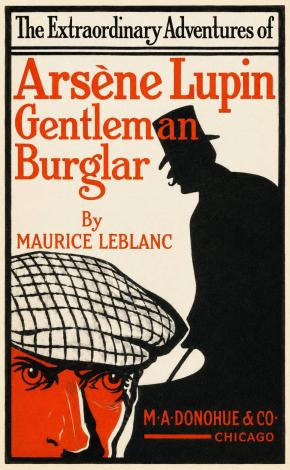
The Extraordinary Adventures of Arsène Lupin, Gentleman-Burglar
"The Extraordinary Adventures of Arsène Lupin, Gentleman-Burglar" by Maurice Leblanc is a collection of stories published in 1907. This debut collection introduces the charming and cunning Arsène Lupin, a master thief who outsmarts police and high society alike. Through nine tales of daring heists, clever disguises, and audacious escapes, Lupin proves himself an unmatched criminal genius. From shipboard robberies to prison breaks, he taunts authorities—including a famous English detective—while stealing priceless treasures with impeccable style and wit.
Then followed Yvain, or Le Chevalier au Lion, and finally came Perceval, or Le Conte du Graal, which gives the first account of the Holy Grail.
literature
наконец появился
наконец последовал
используется в повествовании в официальном стиле для представления последнего лица, события или предмета в последовательности
King Arthur and the Knights of the Round Table
"King Arthur and the Knights of the Round Table" by Sir Thomas Malory is a prose compilation written around 1470. This Middle English work weaves together legendary tales of King Arthur, Guinevere, Lancelot, Merlin, and the Knights of the Round Table. Malory assembled and reworked material from various French and English sources to create a complete narrative spanning Arthur's conception to his death. The compilation includes the quest for the Holy Grail and the legend of Tristan and Iseult, creating one of the most influential works of Arthurian literature.

He finally put them down, shaking his head.
general
наконец
Обозначает действие, которое произошло после того, как Ферраро потратил некоторое время.
The Misplaced Battleship
"The Misplaced Battleship" by Harry Harrison is a science fiction novel written in the early 1960s. The story revolves around interstellar intrigue and crime, specifically the implications of a powerful battleship being secretly built in a peaceful sector of the galaxy. It addresses themes of deception, adventure, and the moral complexities faced by characters navigating both lawful and unlawful pursuits in a futuristic setting.
