


Enter the word for search
opposite
UK
/ˈɒp.ə.zɪt/
US
/ˈɑː.pə.zɪt/
Library
The current, through the wire (B), as shown by the darts (D), moves in one direction, and the induced current in the core (C) travels in the opposite direction, as shown by the darts (D). +3
technology
в противоположном направлении
Двигаться или течь в обратную сторону или по пути, противоположному другому.
Electricity for Boys
"Electricity for Boys" by James Slough Zerbe is a practical guide written in the early 20th century. This work falls within the category of educational publications aimed at teaching young boys the fundamental concepts and applications of electricity through hands-on experiments. It emphasizes the importance of practical experience and experimentation over theoretical knowledge alone. The beginning of the text introduces the fascinating world of electricity, stressing the value of learning through practical application while experimenting with various tools and techniques. Zerbe explains that electricity can be understood better when boys engage directly with the material rather than through rote memorization of its principles. He lays out the book's fundamental approach to education, which involves experimenting, building, and discovering the principles that govern electrical phenomena. This foundational philosophy sets the stage for the more detailed chapters on specific electrical concepts and devices, reflecting a broader goal of fostering critical thinking and hands-on learning among young readers.

There is really no difference between positive and negative electricity, so called, but the foregoing method merely serves as a means of identifying or classifying the opposite ends of a magnet or of a wire. +2
physics
противоположный
Описывает северный полюс одного магнита, обращённый к южному полюсу другого.
Electricity for Boys
"Electricity for Boys" by James Slough Zerbe is a practical guide written in the early 20th century. This work falls within the category of educational publications aimed at teaching young boys the fundamental concepts and applications of electricity through hands-on experiments. It emphasizes the importance of practical experience and experimentation over theoretical knowledge alone. The beginning of the text introduces the fascinating world of electricity, stressing the value of learning through practical application while experimenting with various tools and techniques. Zerbe explains that electricity can be understood better when boys engage directly with the material rather than through rote memorization of its principles. He lays out the book's fundamental approach to education, which involves experimenting, building, and discovering the principles that govern electrical phenomena. This foundational philosophy sets the stage for the more detailed chapters on specific electrical concepts and devices, reflecting a broader goal of fostering critical thinking and hands-on learning among young readers.
Yes, just opposite ours. +2
housing
напротив
противоположный
Используется как предлог для обозначения положения напротив другого человека.
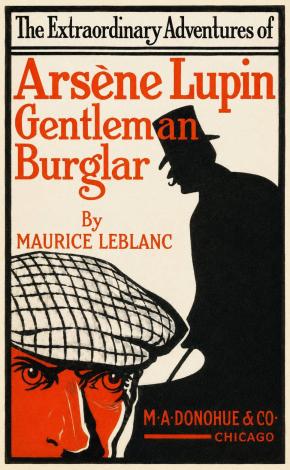
The Extraordinary Adventures of Arsène Lupin, Gentleman-Burglar
"The Extraordinary Adventures of Arsène Lupin, Gentleman-Burglar" by Maurice Leblanc is a collection of stories published in 1907. This debut collection introduces the charming and cunning Arsène Lupin, a master thief who outsmarts police and high society alike. Through nine tales of daring heists, clever disguises, and audacious escapes, Lupin proves himself an unmatched criminal genius. From shipboard robberies to prison breaks, he taunts authorities—including a famous English detective—while stealing priceless treasures with impeccable style and wit.
A current which goes back and forth in opposite directions, unlike a direct current which flows continuously in one direction over a wire. +1
electricity
в противоположных направлениях
Движение в направлениях, противоположных друг другу.
Electricity for Boys
"Electricity for Boys" by James Slough Zerbe is a practical guide written in the early 20th century. This work falls within the category of educational publications aimed at teaching young boys the fundamental concepts and applications of electricity through hands-on experiments. It emphasizes the importance of practical experience and experimentation over theoretical knowledge alone. The beginning of the text introduces the fascinating world of electricity, stressing the value of learning through practical application while experimenting with various tools and techniques. Zerbe explains that electricity can be understood better when boys engage directly with the material rather than through rote memorization of its principles. He lays out the book's fundamental approach to education, which involves experimenting, building, and discovering the principles that govern electrical phenomena. This foundational philosophy sets the stage for the more detailed chapters on specific electrical concepts and devices, reflecting a broader goal of fostering critical thinking and hands-on learning among young readers.
The theme of possession, also understood as the incorporation of different agents of a non-human otherness, can be understood as the opposite of the well-known process of shamanic dismemberment (Eliade, 1964: 53–66).
general
противоположность чему-либо
Выражение, обозначающее нечто обратное или противоположное чему-либо.
Environmental Humanities in India
This collection examines environmental questions in India through literature, culture, Indigenous knowledge and the arts. Its essays explore relationships between people and landscapes, conservation, ecological justice and representations of environmental change.

center to center and bend in opposite direction, leaving this end at a slight angle out from square.
woodworking
противоположный
Указывает, что второй изгиб должен быть направлен в противоположную сторону.
Mission Furniture: How to Make It, Part 3
"Mission Furniture: How to Make It, Part 3" by H. H. Windsor is a practical handbook written in the early 20th century, specifically in 1912. This instructional guide falls under the genre of DIY (Do It Yourself) manuals, focusing on the craftsmanship of mission-style furniture. It is part of a series published under the Popular Mechanics brand, indicating an emphasis on accessible, easily understood information for woodworking enthusiasts of varying skill levels. The opening portion of the book introduces the reader to various projects involved in building mission-style furniture. It outlines the materials and dimensions required for constructing different pieces, including a piano bench, library table, princess dresser, sewing box, and fern stand, among others. Each piece includes detailed instructions on measuring, cutting, and assembling, showcasing Windsor's intention to empower readers to create their own furniture at home. This section serves as an introduction to the comprehensive guidance on crafting that follows in the subsequent chapters, appealing to both novice and experienced woodworkers.

Measure 11-1/4 in. center to center and bend in opposite direction, leaving this end at a slight angle out from square.
engineering
в противоположном направлении
В направлении, противоположном указанному ранее.
Mission Furniture: How to Make It, Part 3
"Mission Furniture: How to Make It, Part 3" by H. H. Windsor is a practical handbook written in the early 20th century, specifically in 1912. This instructional guide falls under the genre of DIY (Do It Yourself) manuals, focusing on the craftsmanship of mission-style furniture. It is part of a series published under the Popular Mechanics brand, indicating an emphasis on accessible, easily understood information for woodworking enthusiasts of varying skill levels. The opening portion of the book introduces the reader to various projects involved in building mission-style furniture. It outlines the materials and dimensions required for constructing different pieces, including a piano bench, library table, princess dresser, sewing box, and fern stand, among others. Each piece includes detailed instructions on measuring, cutting, and assembling, showcasing Windsor's intention to empower readers to create their own furniture at home. This section serves as an introduction to the comprehensive guidance on crafting that follows in the subsequent chapters, appealing to both novice and experienced woodworkers.
Tack the two pieces of moulding marked F and J on the remaining edges of the cardboard with the slots facing in and the large holes of the slots at opposite sides, then place the other two pieces (G and H) 5 in.
woodworking
по противоположным сторонам
Расположенные по двум противоположным сторонам.
Mission Furniture: How to Make It, Part 3
"Mission Furniture: How to Make It, Part 3" by H. H. Windsor is a practical handbook written in the early 20th century, specifically in 1912. This instructional guide falls under the genre of DIY (Do It Yourself) manuals, focusing on the craftsmanship of mission-style furniture. It is part of a series published under the Popular Mechanics brand, indicating an emphasis on accessible, easily understood information for woodworking enthusiasts of varying skill levels. The opening portion of the book introduces the reader to various projects involved in building mission-style furniture. It outlines the materials and dimensions required for constructing different pieces, including a piano bench, library table, princess dresser, sewing box, and fern stand, among others. Each piece includes detailed instructions on measuring, cutting, and assembling, showcasing Windsor's intention to empower readers to create their own furniture at home. This section serves as an introduction to the comprehensive guidance on crafting that follows in the subsequent chapters, appealing to both novice and experienced woodworkers.
It is a succession of short impulses in opposite directions.
electricity
противоположный
Описывает направления следующих друг за другом импульсов тока.
Electricity for Boys
"Electricity for Boys" by James Slough Zerbe is a practical guide written in the early 20th century. This work falls within the category of educational publications aimed at teaching young boys the fundamental concepts and applications of electricity through hands-on experiments. It emphasizes the importance of practical experience and experimentation over theoretical knowledge alone. The beginning of the text introduces the fascinating world of electricity, stressing the value of learning through practical application while experimenting with various tools and techniques. Zerbe explains that electricity can be understood better when boys engage directly with the material rather than through rote memorization of its principles. He lays out the book's fundamental approach to education, which involves experimenting, building, and discovering the principles that govern electrical phenomena. This foundational philosophy sets the stage for the more detailed chapters on specific electrical concepts and devices, reflecting a broader goal of fostering critical thinking and hands-on learning among young readers.
That opposite action outside of the cell or generator is the external.
electrical
противодействие вне элемента или генератора
Сопротивление или противодействующий эффект, находящийся вне элемента или генератора; здесь описывается внешнее сопротивление.
Electricity for Boys
"Electricity for Boys" by James Slough Zerbe is a practical guide written in the early 20th century. This work falls within the category of educational publications aimed at teaching young boys the fundamental concepts and applications of electricity through hands-on experiments. It emphasizes the importance of practical experience and experimentation over theoretical knowledge alone. The beginning of the text introduces the fascinating world of electricity, stressing the value of learning through practical application while experimenting with various tools and techniques. Zerbe explains that electricity can be understood better when boys engage directly with the material rather than through rote memorization of its principles. He lays out the book's fundamental approach to education, which involves experimenting, building, and discovering the principles that govern electrical phenomena. This foundational philosophy sets the stage for the more detailed chapters on specific electrical concepts and devices, reflecting a broader goal of fostering critical thinking and hands-on learning among young readers.
Surfaces separated by a dielectric for opposite charging of the surface.
electricity
противоположное заряжение поверхности
Процесс придания поверхности заряда, противоположного заряду другой поверхности.
Electricity for Boys
"Electricity for Boys" by James Slough Zerbe is a practical guide written in the early 20th century. This work falls within the category of educational publications aimed at teaching young boys the fundamental concepts and applications of electricity through hands-on experiments. It emphasizes the importance of practical experience and experimentation over theoretical knowledge alone. The beginning of the text introduces the fascinating world of electricity, stressing the value of learning through practical application while experimenting with various tools and techniques. Zerbe explains that electricity can be understood better when boys engage directly with the material rather than through rote memorization of its principles. He lays out the book's fundamental approach to education, which involves experimenting, building, and discovering the principles that govern electrical phenomena. This foundational philosophy sets the stage for the more detailed chapters on specific electrical concepts and devices, reflecting a broader goal of fostering critical thinking and hands-on learning among young readers.
The particles form a path or bridge between the opposite terminals of a circuit.
electronics
образовывать путь или перемычку между противоположными выводами цепи
Обеспечивать электрическое соединение между двумя противоположными выводами цепи.
Electricity for Boys
"Electricity for Boys" by James Slough Zerbe is a practical guide written in the early 20th century. This work falls within the category of educational publications aimed at teaching young boys the fundamental concepts and applications of electricity through hands-on experiments. It emphasizes the importance of practical experience and experimentation over theoretical knowledge alone. The beginning of the text introduces the fascinating world of electricity, stressing the value of learning through practical application while experimenting with various tools and techniques. Zerbe explains that electricity can be understood better when boys engage directly with the material rather than through rote memorization of its principles. He lays out the book's fundamental approach to education, which involves experimenting, building, and discovering the principles that govern electrical phenomena. This foundational philosophy sets the stage for the more detailed chapters on specific electrical concepts and devices, reflecting a broader goal of fostering critical thinking and hands-on learning among young readers.