


Enter the word for search
harmless
UK
/ˈhɑːmləs/
US
/ˈhɑrmləs/
Library
He is a poor, harmless fellow whom I met last year. +1
general
inoffensif
Baudru est présenté comme inoffensif, ce qui en fait une personne plausible à utiliser pour la tromperie.
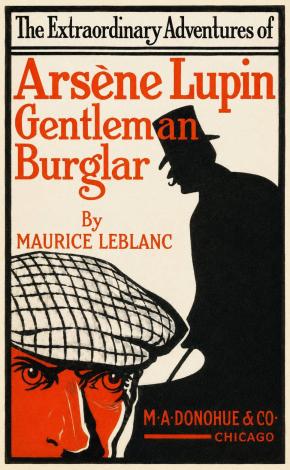
The Extraordinary Adventures of Arsène Lupin, Gentleman-Burglar
"The Extraordinary Adventures of Arsène Lupin, Gentleman-Burglar" by Maurice Leblanc is a collection of stories published in 1907. This debut collection introduces the charming and cunning Arsène Lupin, a master thief who outsmarts police and high society alike. Through nine tales of daring heists, clever disguises, and audacious escapes, Lupin proves himself an unmatched criminal genius. From shipboard robberies to prison breaks, he taunts authorities—including a famous English detective—while stealing priceless treasures with impeccable style and wit.
harms other harmless creatures
ethics
inoffensif
Oppose les créatures pacifiques auxquelles on fait du mal pour le bonheur d’une autre personne au mal qui leur est fait.
Environmental Humanities in India
This collection examines environmental questions in India through literature, culture, Indigenous knowledge and the arts. Its essays explore relationships between people and landscapes, conservation, ecological justice and representations of environmental change.

Suppose we seem as shocking as the Christians because we are really as harmless as the Christians.
general
aussi inoffensif que
Une structure comparative utilisée pour dire que quelque chose ou quelqu’un est tout aussi inoffensif qu’une autre personne ou chose.
The Man Who Was Thursday: A Nightmare
"The Man Who Was Thursday: A Nightmare" by G. K. Chesterton is a philosophical novel with elements of adventure and satire, written in the late 19th century. The story revolves around the enigmatic character Gabriel Syme, a police detective who infiltrates a group of anarchists in London to uncover their plans and identities. As the narrative unfolds, it explores complex themes of order, chaos, and the nature of evil, often through witty dialogue and absurd situations that challenge conventional thinking. At the start of the novel, readers are introduced to the suburb of Saffron Park, with its colorful and eccentric inhabitants, primarily poets and artists. One evening, during a striking sunset, the anarchistic poet Lucian Gregory meets Gabriel Syme, who surprises him with bold arguments in favor of law and order, challenging Gregory's views. Their conversation escalates into a duel of ideologies when Gregory reveals his deep commitment to anarchism, which leads to a confrontation between the two. In a twist of fate, Syme's true identity as a detective is disclosed, and as he joins the anarchists disguised as one of them, the stage is set for a profound exploration of the philosophical conflict between chaos and structure in society.

This time, it would not be a simple theft or a comparatively harmless assault; it would be a crime, a murder.
crime
agression relativement bénigne
Une attaque qui est relativement mineure et cause peu de dommages par rapport à un crime plus grave.
The Extraordinary Adventures of Arsène Lupin, Gentleman-Burglar
"The Extraordinary Adventures of Arsène Lupin, Gentleman-Burglar" by Maurice Leblanc is a collection of stories published in 1907. This debut collection introduces the charming and cunning Arsène Lupin, a master thief who outsmarts police and high society alike. Through nine tales of daring heists, clever disguises, and audacious escapes, Lupin proves himself an unmatched criminal genius. From shipboard robberies to prison breaks, he taunts authorities—including a famous English detective—while stealing priceless treasures with impeccable style and wit.
slaying harmless people
warfare
inoffensif
«Inoffensif» souligne que les personnes tuées ne représentent aucune menace.
King Arthur and the Knights of the Round Table
"King Arthur and the Knights of the Round Table" by Sir Thomas Malory is a prose compilation written around 1470. This Middle English work weaves together legendary tales of King Arthur, Guinevere, Lancelot, Merlin, and the Knights of the Round Table. Malory assembled and reworked material from various French and English sources to create a complete narrative spanning Arthur's conception to his death. The compilation includes the quest for the Holy Grail and the legend of Tristan and Iseult, creating one of the most influential works of Arthurian literature.

He commanded him "not continue ravaging the country and slaying harmless people."
warfare
tuer des personnes innocentes
Tuer des personnes innocentes ou non-combattantes.
King Arthur and the Knights of the Round Table
"King Arthur and the Knights of the Round Table" by Sir Thomas Malory is a prose compilation written around 1470. This Middle English work weaves together legendary tales of King Arthur, Guinevere, Lancelot, Merlin, and the Knights of the Round Table. Malory assembled and reworked material from various French and English sources to create a complete narrative spanning Arthur's conception to his death. The compilation includes the quest for the Holy Grail and the legend of Tristan and Iseult, creating one of the most influential works of Arthurian literature.
Seeing we were all harmless, the officer dropped his military preciseness as if it were an ill-fitting garment.
general
étant donné que
puisque
Une construction participiale qui signifie après avoir remarqué ou s’être rendu compte que quelque chose était le cas.
The Yeoman Adventurer
"The Yeoman Adventurer" by George W. Gough is a historical novel likely written in the early 20th century. The story unfolds through the experiences of Oliver Wheatman, a yeoman, as he navigates life in a tumultuous period marked by the Jacobite uprisings, personal ambition, and romantic entanglements. The novel delves into themes of bravery, identity, and the quest for adventure against a backdrop of deep social and political upheaval. The opening of the book introduces Oliver Wheatman as he reflects on his life in a rural setting, immediately exposing his longing for adventure and the complexities of his relationships, especially with a character named Kate and her brother Jack Dobson, a soldier. As he witnesses soldiers marching and grapples with feelings of inadequacy, his fate intertwines with that of a captivating woman, Mistress Margaret Waynflete, who is entangled in the Jacobite cause. The chapter sets up a series of events where violence and danger emerge, ultimately leading Oliver to rescue Mistress Waynflete, and shapes the thrilling and romantic quest that defines the narrative.
