


Enter the word for search
decay
UK
/dɪˈkeɪ/
US
/dɪˈkeɪ/
Library
lying in a state of decay
maritime
ветшание
Описывает обветшалое состояние судов.
Records of a Family of Engineers
"Records of a Family of Engineers" by Robert Louis Stevenson is a historical account written in the early 20th century. The book delves into the lineage of the Stevenson family, particularly focusing on their contributions as engineers and their experiences across generations in Scotland, intertwining personal anecdotes with broader historical narratives. The opening of the book introduces the reader to the Stevenson family tree, tracing their surname's evolution and historical context from the 13th century onward. It reveals a lineage that has faced both successes and tragedies, with a particular focus on the early lives of James Stevenson, his brother Hugh, and their heir, Robert Stevenson. The text sketches their aspirations, marriages, and struggles, ultimately painting a portrait of a family deeply rooted in the engineering profession, set against the backdrop of the rugged Scottish landscape and societal changes of their time. This initial section not only captures the essence of their individual experiences but sets the stage for further exploration of the family's lasting impact on engineering.

About twenty of Bonaparte’s English flotilla were lying in a state of decay.
maritime
в ветхом состоянии
Описывает то, что со временем пришло в негодность.
Records of a Family of Engineers
"Records of a Family of Engineers" by Robert Louis Stevenson is a historical account written in the early 20th century. The book delves into the lineage of the Stevenson family, particularly focusing on their contributions as engineers and their experiences across generations in Scotland, intertwining personal anecdotes with broader historical narratives. The opening of the book introduces the reader to the Stevenson family tree, tracing their surname's evolution and historical context from the 13th century onward. It reveals a lineage that has faced both successes and tragedies, with a particular focus on the early lives of James Stevenson, his brother Hugh, and their heir, Robert Stevenson. The text sketches their aspirations, marriages, and struggles, ultimately painting a portrait of a family deeply rooted in the engineering profession, set against the backdrop of the rugged Scottish landscape and societal changes of their time. This initial section not only captures the essence of their individual experiences but sets the stage for further exploration of the family's lasting impact on engineering.
Stop after the recording’s natural end; the exact length of audible decay depends on the player and listening conditions.
acoustics
затухание
В аудио затухание — это постепенное уменьшение громкости или резонанса звука со временем.
Bach BWV 846 — First Listening Map — accessible HTML
Bach BWV 846 — First Listening Map — accessible HTML — complete contextual material in English.
Stop after the recording’s natural end; the exact length of audible decay depends on the player and listening conditions.
music
слышимое затухание
Постепенное затухание звука, которое слышно после окончания основного тона.
Bach BWV 846 — First Listening Map — accessible HTML
Bach BWV 846 — First Listening Map — accessible HTML — complete contextual material in English.
If the wall were worn away and had fallen into decay.
architecture
разрушение
Здесь «decay» означает, что стена со временем ослабла и разрушилась.
Four Arthurian Romances
"Four Arthurian Romances" by Chrétien de Troyes is a collection of medieval narratives written in the latter part of the 12th century. This work encompasses the stories of four heroes: Erec, Cligés, Yvain, and Lancelot, each exploring the themes of chivalry, romance, and adventure intertwined with the sophisticated ideals of courtly love. The romances reflect the rich tapestry of Arthurian legend, showcasing knights undertaking noble quests and engaging in battles for honor and love. The opening of "Four Arthurian Romances" introduces the tale of Erec and Enide, beginning with King Arthur's court and the announcement of a hunt for the elusive White Stag, which involves a significant and potentially troublesome tradition. Erec, a prominent knight, is drawn into conflict after a dwarf and a knight insult and strike a damsel at the court. Following this assault, Erec seeks to avenge the honor of the lady, embarking on a quest that leads him through various perils and encounters. His journey sets the stage for themes of valor and love as Erec strives to prove himself worthy, ultimately leading to his romantic involvement with Enide and the promise of her marriage. The romance illustrates not just action and adventure, but also explores the emotional and social dynamics of courtly life in a quintessential chivalric manner.
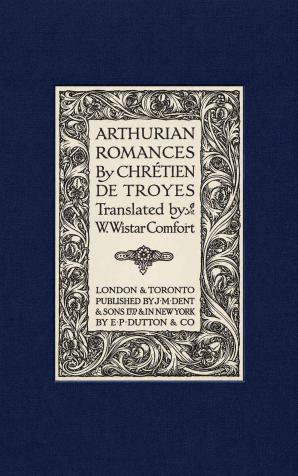
If the wall were worn away and had fallen into decay, would he not have been caught and injured or killed at the same time?
construction
прийти в упадок
Со временем разрушиться, прийти в запустение и потерять прочность.
Four Arthurian Romances
"Four Arthurian Romances" by Chrétien de Troyes is a collection of medieval narratives written in the latter part of the 12th century. This work encompasses the stories of four heroes: Erec, Cligés, Yvain, and Lancelot, each exploring the themes of chivalry, romance, and adventure intertwined with the sophisticated ideals of courtly love. The romances reflect the rich tapestry of Arthurian legend, showcasing knights undertaking noble quests and engaging in battles for honor and love. The opening of "Four Arthurian Romances" introduces the tale of Erec and Enide, beginning with King Arthur's court and the announcement of a hunt for the elusive White Stag, which involves a significant and potentially troublesome tradition. Erec, a prominent knight, is drawn into conflict after a dwarf and a knight insult and strike a damsel at the court. Following this assault, Erec seeks to avenge the honor of the lady, embarking on a quest that leads him through various perils and encounters. His journey sets the stage for themes of valor and love as Erec strives to prove himself worthy, ultimately leading to his romantic involvement with Enide and the promise of her marriage. The romance illustrates not just action and adventure, but also explores the emotional and social dynamics of courtly life in a quintessential chivalric manner.
Save for his intellect, he was in the last dissolution of senile decay.
aging
старческое угасание
Физическое и умственное ухудшение, связанное с глубокой старостью.
The Man Who Was Thursday: A Nightmare
"The Man Who Was Thursday: A Nightmare" by G. K. Chesterton is a philosophical novel with elements of adventure and satire, written in the late 19th century. The story revolves around the enigmatic character Gabriel Syme, a police detective who infiltrates a group of anarchists in London to uncover their plans and identities. As the narrative unfolds, it explores complex themes of order, chaos, and the nature of evil, often through witty dialogue and absurd situations that challenge conventional thinking. At the start of the novel, readers are introduced to the suburb of Saffron Park, with its colorful and eccentric inhabitants, primarily poets and artists. One evening, during a striking sunset, the anarchistic poet Lucian Gregory meets Gabriel Syme, who surprises him with bold arguments in favor of law and order, challenging Gregory's views. Their conversation escalates into a duel of ideologies when Gregory reveals his deep commitment to anarchism, which leads to a confrontation between the two. In a twist of fate, Syme's true identity as a detective is disclosed, and as he joins the anarchists disguised as one of them, the stage is set for a profound exploration of the philosophical conflict between chaos and structure in society.

Science announced nonentity and art admired decay;
literature
восхищалось упадком
Считало упадок, разложение или разрушение эстетически привлекательными.
The Man Who Was Thursday: A Nightmare
"The Man Who Was Thursday: A Nightmare" by G. K. Chesterton is a philosophical novel with elements of adventure and satire, written in the late 19th century. The story revolves around the enigmatic character Gabriel Syme, a police detective who infiltrates a group of anarchists in London to uncover their plans and identities. As the narrative unfolds, it explores complex themes of order, chaos, and the nature of evil, often through witty dialogue and absurd situations that challenge conventional thinking. At the start of the novel, readers are introduced to the suburb of Saffron Park, with its colorful and eccentric inhabitants, primarily poets and artists. One evening, during a striking sunset, the anarchistic poet Lucian Gregory meets Gabriel Syme, who surprises him with bold arguments in favor of law and order, challenging Gregory's views. Their conversation escalates into a duel of ideologies when Gregory reveals his deep commitment to anarchism, which leads to a confrontation between the two. In a twist of fate, Syme's true identity as a detective is disclosed, and as he joins the anarchists disguised as one of them, the stage is set for a profound exploration of the philosophical conflict between chaos and structure in society.