


Enter the word for search
never
UK
/ˈnɛvə/
US
/ˈnɛvər/
Library
Never heard of it, Inskipp said as we took the private drop chute to his office. +7
general
никогда
Слово делает утверждение абсолютным: такие люди никогда не считают это возможным.
The Misplaced Battleship
"The Misplaced Battleship" by Harry Harrison is a science fiction novel written in the early 1960s. The story revolves around interstellar intrigue and crime, specifically the implications of a powerful battleship being secretly built in a peaceful sector of the galaxy. It addresses themes of deception, adventure, and the moral complexities faced by characters navigating both lawful and unlawful pursuits in a futuristic setting.

But never mind my best clothes. +3
general
неважно
не обращай внимания
Фраза, которой отмахиваются от беспокойства или говорят, что что-то неважно.
The Yeoman Adventurer
"The Yeoman Adventurer" by George W. Gough is a historical novel likely written in the early 20th century. The story unfolds through the experiences of Oliver Wheatman, a yeoman, as he navigates life in a tumultuous period marked by the Jacobite uprisings, personal ambition, and romantic entanglements. The novel delves into themes of bravery, identity, and the quest for adventure against a backdrop of deep social and political upheaval. The opening of the book introduces Oliver Wheatman as he reflects on his life in a rural setting, immediately exposing his longing for adventure and the complexities of his relationships, especially with a character named Kate and her brother Jack Dobson, a soldier. As he witnesses soldiers marching and grapples with feelings of inadequacy, his fate intertwines with that of a captivating woman, Mistress Margaret Waynflete, who is entangled in the Jacobite cause. The chapter sets up a series of events where violence and danger emerge, ultimately leading Oliver to rescue Mistress Waynflete, and shapes the thrilling and romantic quest that defines the narrative.

"That will I never do," said the knight. +2
general
Этого я никогда не сделаю
Решительный отказ, выраженный с помощью архаичной инверсии.
King Arthur and the Knights of the Round Table
"King Arthur and the Knights of the Round Table" by Sir Thomas Malory is a prose compilation written around 1470. This Middle English work weaves together legendary tales of King Arthur, Guinevere, Lancelot, Merlin, and the Knights of the Round Table. Malory assembled and reworked material from various French and English sources to create a complete narrative spanning Arthur's conception to his death. The compilation includes the quest for the Holy Grail and the legend of Tristan and Iseult, creating one of the most influential works of Arthurian literature.

I promise you never in my life to wear armour on my face +1
general
никогда в жизни
Подчёркивает, что что-либо никогда не происходило в течение жизни говорящего.
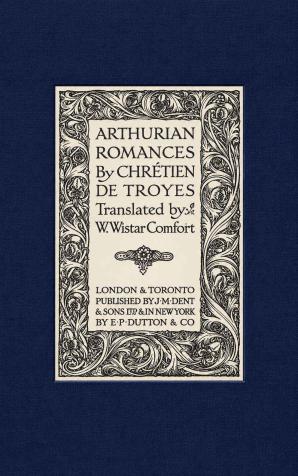
Four Arthurian Romances
"Four Arthurian Romances" by Chrétien de Troyes is a collection of medieval narratives written in the latter part of the 12th century. This work encompasses the stories of four heroes: Erec, Cligés, Yvain, and Lancelot, each exploring the themes of chivalry, romance, and adventure intertwined with the sophisticated ideals of courtly love. The romances reflect the rich tapestry of Arthurian legend, showcasing knights undertaking noble quests and engaging in battles for honor and love. The opening of "Four Arthurian Romances" introduces the tale of Erec and Enide, beginning with King Arthur's court and the announcement of a hunt for the elusive White Stag, which involves a significant and potentially troublesome tradition. Erec, a prominent knight, is drawn into conflict after a dwarf and a knight insult and strike a damsel at the court. Following this assault, Erec seeks to avenge the honor of the lady, embarking on a quest that leads him through various perils and encounters. His journey sets the stage for themes of valor and love as Erec strives to prove himself worthy, ultimately leading to his romantic involvement with Enide and the promise of her marriage. The romance illustrates not just action and adventure, but also explores the emotional and social dynamics of courtly life in a quintessential chivalric manner.
Never again could she so strive successfully to reproduce her pattern. +1
general
больше никогда
никогда больше
Никогда больше; ни в какое время в будущем.
Four Arthurian Romances
"Four Arthurian Romances" by Chrétien de Troyes is a collection of medieval narratives written in the latter part of the 12th century. This work encompasses the stories of four heroes: Erec, Cligés, Yvain, and Lancelot, each exploring the themes of chivalry, romance, and adventure intertwined with the sophisticated ideals of courtly love. The romances reflect the rich tapestry of Arthurian legend, showcasing knights undertaking noble quests and engaging in battles for honor and love. The opening of "Four Arthurian Romances" introduces the tale of Erec and Enide, beginning with King Arthur's court and the announcement of a hunt for the elusive White Stag, which involves a significant and potentially troublesome tradition. Erec, a prominent knight, is drawn into conflict after a dwarf and a knight insult and strike a damsel at the court. Following this assault, Erec seeks to avenge the honor of the lady, embarking on a quest that leads him through various perils and encounters. His journey sets the stage for themes of valor and love as Erec strives to prove himself worthy, ultimately leading to his romantic involvement with Enide and the promise of her marriage. The romance illustrates not just action and adventure, but also explores the emotional and social dynamics of courtly life in a quintessential chivalric manner.
If by some unhappy chance I never saw her again and lived to be a hundred, I should never tire of my memories. +1
general
никогда не уставать от
никогда не уставать от чего-либо
Не начинать скучать или уставать от чего-либо.
The Yeoman Adventurer
"The Yeoman Adventurer" by George W. Gough is a historical novel likely written in the early 20th century. The story unfolds through the experiences of Oliver Wheatman, a yeoman, as he navigates life in a tumultuous period marked by the Jacobite uprisings, personal ambition, and romantic entanglements. The novel delves into themes of bravery, identity, and the quest for adventure against a backdrop of deep social and political upheaval. The opening of the book introduces Oliver Wheatman as he reflects on his life in a rural setting, immediately exposing his longing for adventure and the complexities of his relationships, especially with a character named Kate and her brother Jack Dobson, a soldier. As he witnesses soldiers marching and grapples with feelings of inadequacy, his fate intertwines with that of a captivating woman, Mistress Margaret Waynflete, who is entangled in the Jacobite cause. The chapter sets up a series of events where violence and danger emerge, ultimately leading Oliver to rescue Mistress Waynflete, and shapes the thrilling and romantic quest that defines the narrative.
“You never know,” Sana said.
general
Кто знает
Разговорное выражение о том, что что-то возможно, хотя и неизвестно.
The Extra Bowl
While a pot of lentils cooks, Sana tells Leo how her father made room for an unexpected visitor and how the soup changed after she moved.
Scholars could begin to read words that were never written on the stone.
archaeology
прочитать слова, которых никогда не было написано на камне
Восстановить или вывести из свидетельств слова, которых буквально нет на камне.
How the Rosetta Stone Helped Scholars Read Hieroglyphs
A king’s name in a familiar script gave scholars a starting point in an unfamiliar one. The three bands on the stone show how the comparison worked.
Their bodies were never recovered.
disaster
их тела так и не были найдены
Формальный способ сказать, что тела погибших или пропавших людей не были найдены.
The Open Window by Saki
Optional complete literary original (B2–C1) from Saki’s 1914 collection Beasts and Super-Beasts. The shorter scene and commentary appear in the first material.
They never came back.
general
так и не вернуться
Не вернуться, особенно после того, как уйти куда-либо или отправиться на какое-либо дело.
The Open Window by Saki
Optional complete literary original (B2–C1) from Saki’s 1914 collection Beasts and Super-Beasts. The shorter scene and commentary appear in the first material.
While he waits, Vera tells him that three men went out through the window years ago and never came home.
general
так и не вернулись домой
Так и не вернулись домой после этого.
From a Greeting to a Run for the Gate
A B1–B2 account of the return, four consecutive paragraphs from Saki’s printed original, and two listening points in Simon Stanhope’s reading.
Their bodies were never recovered.
disaster
тела так и не были найдены
Тела не удалось найти после гибели или исчезновения людей.
The Open Window by Saki
Optional complete literary original (B2–C1) from Saki’s 1914 collection Beasts and Super-Beasts. The shorter scene and commentary appear in the first material.