


Enter the word for search
up
UK
/ʌp/
US
/ʌp/
Library
Square up the four upper rails, 6 by 22 in., marking the working face and edge to work from when laying out the tenons later. +9
woodworking
выправить под прямым углом
выровнять
выровнять до квадратной формы
выравнивать под прямым углом
выровнять, придав прямоугольную форму
выровнять под прямым углом
выравнивать
В столярном деле — выправить деталь, придав ей ровную форму и точное прямоугольное расположение.
Mission Furniture: How to Make It, Part 3
"Mission Furniture: How to Make It, Part 3" by H. H. Windsor is a practical handbook written in the early 20th century, specifically in 1912. This instructional guide falls under the genre of DIY (Do It Yourself) manuals, focusing on the craftsmanship of mission-style furniture. It is part of a series published under the Popular Mechanics brand, indicating an emphasis on accessible, easily understood information for woodworking enthusiasts of varying skill levels. The opening portion of the book introduces the reader to various projects involved in building mission-style furniture. It outlines the materials and dimensions required for constructing different pieces, including a piano bench, library table, princess dresser, sewing box, and fern stand, among others. Each piece includes detailed instructions on measuring, cutting, and assembling, showcasing Windsor's intention to empower readers to create their own furniture at home. This section serves as an introduction to the comprehensive guidance on crafting that follows in the subsequent chapters, appealing to both novice and experienced woodworkers.

Erec hears well and notes that up and down they said of him: "Alas, alas, ill-starred wert thou, fair, gentle, skilful knight! +7
general
повсюду
вдоль и поперёк
вверх и вниз
всюду
Повсюду или по всей местности; здесь означает, что о нём говорили везде.
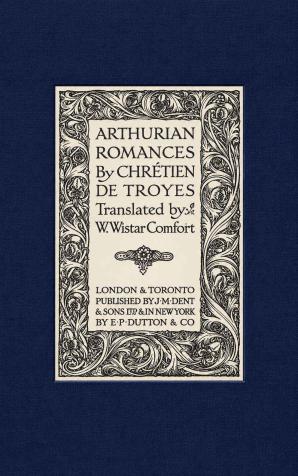
Four Arthurian Romances
"Four Arthurian Romances" by Chrétien de Troyes is a collection of medieval narratives written in the latter part of the 12th century. This work encompasses the stories of four heroes: Erec, Cligés, Yvain, and Lancelot, each exploring the themes of chivalry, romance, and adventure intertwined with the sophisticated ideals of courtly love. The romances reflect the rich tapestry of Arthurian legend, showcasing knights undertaking noble quests and engaging in battles for honor and love. The opening of "Four Arthurian Romances" introduces the tale of Erec and Enide, beginning with King Arthur's court and the announcement of a hunt for the elusive White Stag, which involves a significant and potentially troublesome tradition. Erec, a prominent knight, is drawn into conflict after a dwarf and a knight insult and strike a damsel at the court. Following this assault, Erec seeks to avenge the honor of the lady, embarking on a quest that leads him through various perils and encounters. His journey sets the stage for themes of valor and love as Erec strives to prove himself worthy, ultimately leading to his romantic involvement with Enide and the promise of her marriage. The romance illustrates not just action and adventure, but also explores the emotional and social dynamics of courtly life in a quintessential chivalric manner.
the importance of an institutional set-up +6
governance
институциональное устройство
То, как устроены и организованы институты.
Competition Authorities in South Eastern Europe: Building Institutions in Emerging Markets
This open access book provides answers to key open questions concerning competition policy in emerging economies, with a focus on South Eastern Europe. The contributions address two major issues. One is the design of competition policy and the national competition authorities that enforce it, including the topics of competition advocacy and state aid control; the other is the use of economic methods in competition law enforcement, especially in the cases of relevant market definition and merger control. Many lessons learned in the countries of South Eastern Europe can be applied to the emerging markets of other regions. As such, the findings presented here will be highly relevant for officials and staff at national competition authorities, advisers to legislators shaping national competition policy, competition law professionals, and university students alike. ; Presents topical insights into the institutional design of national competition authorities Offers specific economic methods relevant for competition law enforcement Linked to a dedicated website providing information about ongoing competition law cases in SEE countries

so I too pulled up +6
equestrian
остановиться
остановились
остановился
остановить
Остановить лошадь или транспорт; здесь — остановиться верхом.
The Yeoman Adventurer
"The Yeoman Adventurer" by George W. Gough is a historical novel likely written in the early 20th century. The story unfolds through the experiences of Oliver Wheatman, a yeoman, as he navigates life in a tumultuous period marked by the Jacobite uprisings, personal ambition, and romantic entanglements. The novel delves into themes of bravery, identity, and the quest for adventure against a backdrop of deep social and political upheaval. The opening of the book introduces Oliver Wheatman as he reflects on his life in a rural setting, immediately exposing his longing for adventure and the complexities of his relationships, especially with a character named Kate and her brother Jack Dobson, a soldier. As he witnesses soldiers marching and grapples with feelings of inadequacy, his fate intertwines with that of a captivating woman, Mistress Margaret Waynflete, who is entangled in the Jacobite cause. The chapter sets up a series of events where violence and danger emerge, ultimately leading Oliver to rescue Mistress Waynflete, and shapes the thrilling and romantic quest that defines the narrative.

I fetched my rod and tackle, picked up the bucket of dace, and set off across the fields to the river. +6
literature
поднять
поднимать
подобрали
подбирать
подобрать
взять книгу
Взять книгу или текст, чтобы читать его.
The Yeoman Adventurer
"The Yeoman Adventurer" by George W. Gough is a historical novel likely written in the early 20th century. The story unfolds through the experiences of Oliver Wheatman, a yeoman, as he navigates life in a tumultuous period marked by the Jacobite uprisings, personal ambition, and romantic entanglements. The novel delves into themes of bravery, identity, and the quest for adventure against a backdrop of deep social and political upheaval. The opening of the book introduces Oliver Wheatman as he reflects on his life in a rural setting, immediately exposing his longing for adventure and the complexities of his relationships, especially with a character named Kate and her brother Jack Dobson, a soldier. As he witnesses soldiers marching and grapples with feelings of inadequacy, his fate intertwines with that of a captivating woman, Mistress Margaret Waynflete, who is entangled in the Jacobite cause. The chapter sets up a series of events where violence and danger emerge, ultimately leading Oliver to rescue Mistress Waynflete, and shapes the thrilling and romantic quest that defines the narrative.
The other wire is connected up with both of the outside plates. +5
engineering
подключён к
подключить к
подсоединять к
подсоединить к
соединить с
Электрически соединён с другой деталью или набором деталей.
Electricity for Boys
"Electricity for Boys" by James Slough Zerbe is a practical guide written in the early 20th century. This work falls within the category of educational publications aimed at teaching young boys the fundamental concepts and applications of electricity through hands-on experiments. It emphasizes the importance of practical experience and experimentation over theoretical knowledge alone. The beginning of the text introduces the fascinating world of electricity, stressing the value of learning through practical application while experimenting with various tools and techniques. Zerbe explains that electricity can be understood better when boys engage directly with the material rather than through rote memorization of its principles. He lays out the book's fundamental approach to education, which involves experimenting, building, and discovering the principles that govern electrical phenomena. This foundational philosophy sets the stage for the more detailed chapters on specific electrical concepts and devices, reflecting a broader goal of fostering critical thinking and hands-on learning among young readers.

After numerous experiments, Murdock had his house in Cross Street fitted up in 1792 for being lit by gas. +5
shipping
оборудовать
монтировать
оборудовали
Оснастить дом для определённого использования, здесь — для газового освещения.
Men of Invention and Industry
"Men of Invention and Industry" by Samuel Smiles is a historical account likely written in the late 19th century. The book examines the lives and contributions of various inventors and industrialists, highlighting their impact on society, particularly within British industry, with an emphasis on significant advancements such as shipbuilding and steam power. The opening of the book sets the stage with a discussion of the early history of English shipbuilding, beginning with the figure of Phineas Pett. It explores the humble beginnings of the British navy and the advancements made under historical figures like Henry VIII. Various early challenges in shipbuilding are elucidated, alongside the importance of foreign expertise in developing England’s maritime capabilities. The narrative illustrates a shift from a heavy reliance on importing goods and expertise to a burgeoning English independence in shipbuilding and trade, paving the way for a stronger national identity tied to maritime innovation.

For an hour or more I took short turns up and down the bank, just far enough from the edge to keep my cork in view. +5
general
вдоль берега туда и обратно
взад и вперёд
вверх и вниз
Повторяясь, двигаться или перемещаться вверх и вниз.
The Yeoman Adventurer
"The Yeoman Adventurer" by George W. Gough is a historical novel likely written in the early 20th century. The story unfolds through the experiences of Oliver Wheatman, a yeoman, as he navigates life in a tumultuous period marked by the Jacobite uprisings, personal ambition, and romantic entanglements. The novel delves into themes of bravery, identity, and the quest for adventure against a backdrop of deep social and political upheaval. The opening of the book introduces Oliver Wheatman as he reflects on his life in a rural setting, immediately exposing his longing for adventure and the complexities of his relationships, especially with a character named Kate and her brother Jack Dobson, a soldier. As he witnesses soldiers marching and grapples with feelings of inadequacy, his fate intertwines with that of a captivating woman, Mistress Margaret Waynflete, who is entangled in the Jacobite cause. The chapter sets up a series of events where violence and danger emerge, ultimately leading Oliver to rescue Mistress Waynflete, and shapes the thrilling and romantic quest that defines the narrative.
Theatre artists on tour do not migrate in the conventional sense; that is, they do not give up their primary place of residence and establish a new one. +4
general
отказаться от
сдаваться
Отказаться от чего-либо или оставить это; здесь — навсегда оставить своё постоянное место жительства.
European Theatre Migrants in the Age of Empire
This collection examines the journeys and working lives of European theatre practitioners during the age of empire. Historical case studies explore migration, performance, cultural exchange and the political conditions shaping theatrical careers across national borders.

He must make a battery for the production of current, a pair of electro-magnets to be acted upon by the current, a switch to control it, and, finally, he must learn how to connect it up so that it may be operated not only from one, but from two or more push buttons. +4
engineering
подключить
соединять
подключать
Соединить части электрического устройства или цепи, чтобы оно могло работать.
Electricity for Boys
"Electricity for Boys" by James Slough Zerbe is a practical guide written in the early 20th century. This work falls within the category of educational publications aimed at teaching young boys the fundamental concepts and applications of electricity through hands-on experiments. It emphasizes the importance of practical experience and experimentation over theoretical knowledge alone. The beginning of the text introduces the fascinating world of electricity, stressing the value of learning through practical application while experimenting with various tools and techniques. Zerbe explains that electricity can be understood better when boys engage directly with the material rather than through rote memorization of its principles. He lays out the book's fundamental approach to education, which involves experimenting, building, and discovering the principles that govern electrical phenomena. This foundational philosophy sets the stage for the more detailed chapters on specific electrical concepts and devices, reflecting a broader goal of fostering critical thinking and hands-on learning among young readers.
He discovered the footsteps of the horses, and they all followed the trail, the Count threatening Erec and vowing that, if he can come up with him, nothing can keep him from having his head on the spot. +4
literature
догнать кого-либо
В этом контексте означает «догнать кого-либо», а не «придумать что-либо».
Four Arthurian Romances
"Four Arthurian Romances" by Chrétien de Troyes is a collection of medieval narratives written in the latter part of the 12th century. This work encompasses the stories of four heroes: Erec, Cligés, Yvain, and Lancelot, each exploring the themes of chivalry, romance, and adventure intertwined with the sophisticated ideals of courtly love. The romances reflect the rich tapestry of Arthurian legend, showcasing knights undertaking noble quests and engaging in battles for honor and love. The opening of "Four Arthurian Romances" introduces the tale of Erec and Enide, beginning with King Arthur's court and the announcement of a hunt for the elusive White Stag, which involves a significant and potentially troublesome tradition. Erec, a prominent knight, is drawn into conflict after a dwarf and a knight insult and strike a damsel at the court. Following this assault, Erec seeks to avenge the honor of the lady, embarking on a quest that leads him through various perils and encounters. His journey sets the stage for themes of valor and love as Erec strives to prove himself worthy, ultimately leading to his romantic involvement with Enide and the promise of her marriage. The romance illustrates not just action and adventure, but also explores the emotional and social dynamics of courtly life in a quintessential chivalric manner.
Now Enide is in great distress: very sad and pensive, she gets up, blaming and upbraiding herself for the foolish words she spoke: she had now made her bed, and must lie in it. +4
general
вставать
встать
Подниматься из сидячего или лежачего положения.
Four Arthurian Romances
"Four Arthurian Romances" by Chrétien de Troyes is a collection of medieval narratives written in the latter part of the 12th century. This work encompasses the stories of four heroes: Erec, Cligés, Yvain, and Lancelot, each exploring the themes of chivalry, romance, and adventure intertwined with the sophisticated ideals of courtly love. The romances reflect the rich tapestry of Arthurian legend, showcasing knights undertaking noble quests and engaging in battles for honor and love. The opening of "Four Arthurian Romances" introduces the tale of Erec and Enide, beginning with King Arthur's court and the announcement of a hunt for the elusive White Stag, which involves a significant and potentially troublesome tradition. Erec, a prominent knight, is drawn into conflict after a dwarf and a knight insult and strike a damsel at the court. Following this assault, Erec seeks to avenge the honor of the lady, embarking on a quest that leads him through various perils and encounters. His journey sets the stage for themes of valor and love as Erec strives to prove himself worthy, ultimately leading to his romantic involvement with Enide and the promise of her marriage. The romance illustrates not just action and adventure, but also explores the emotional and social dynamics of courtly life in a quintessential chivalric manner.